Guest Blogger continued…

Taj Mahal

Upon closer inspection of the Taj Mahal, the workmanship of the building is amazing. All the designs and writings are done with inlay technique using precious and semi-precious stones. 

Stone Carving

After our visit to the Taj Mahal, we went to Marble Krafts to see a demonstration of the artisans making the marble inlays using the same technique as found on the walls of the Taj Mahal. The family artisans create their own designs but will do special orders as well.  We were told during the demonstration that the artisans are descendents of the original craftsmen who worked at the Taj Mahal. But the tour guide also told us about the legend of the Black Taj Mahal which has been refuted. Hard to know what to believe…

India Stone box with precious stones

The semi precious stones such as Lapis lazuli, Onyx, Jasper, Cornelian, etc  are combined with various marble colors to create items such as small boxes, bathroom tiles, chess boards & table tops. The decorative art is known as pietra dura inlay which has floral and geometric patterns  ~ creating a beautiful result. 

India Stone Box

I’ve had an opportunity to travel extensively but can’t always take my family. During my travels, I like to bring a little something home and I started bringing small locally crafted boxes for my daughter. This box seemed perfect to add to her collection.

India Market

Speaking of shopping, upon returning to New Dehli, a few of us decided to go to the Dilli Haat Market. What a great place ~ it is organized with stalls from all the different regions in India. Also, there’s a nominal entrance fee (about 20 rupees) which means there weren’t any pickpockets or beggars to distract while we walked around the stalls. The central food area looked interesting but since I had just recently arrived in India, I was still not ready to tackle street food.

India Hand Stitching on Pashmina

Hand stitched pashmina.

India Pashmina with hand stitching

Before I went to the Dilli Haat market, I had never heard of a pashmina but after speaking with the vendor from Kashmir, I was convinced I had to get one for my wife. He said the material came from the neck ~the softest part. Later I learned there’s a trick to telling a good pashmina. Pull it through a ring and if it goes through smoothly, it’s good quality.

For more information on:

Marble Krafts, click here.

Dilli haat Market, click here.

Taj Mahal

Even though India is high on my list of places to visit and the Taj Mahal is at the tippy top of the list, it’s doubtful I’ll be there anytime soon. John (my husband), on the other hand, spent the month of May on a school trip to India, Nepal and Bangladesh. I’ve been living vicariously through his stories and photos. And bonus, he’s agreed to share his travels here on Displaced Beachbums as a guest blogger ~ we’ll need a few posts to cover the three-week trip. Hope you enjoy reading about his adventures as much as I have. All photos taken by John.

We woke up early to catch the two-hour train ride from Delhi to Agra. The train ride was our first full day in India and we were bombarded by the cacophony of sights, sounds and smells. Having just come from London, the 42°C (107°F) temperatures were oppressive. The most striking aspect of the journal was the people ~ everywhere! Sleeping on the sidewalks, crowding on the trains. Sadly, many children begging.

India Train Station

Agra Train Station, India

India Tuk Tuks

Tuk-Tuks at the Agra Train Station

Entrance Gate to Taj mahal

Entrance gate to the Taj Mahal.

We took a coach from the Agra Train station to a parking area not far from the Taj Mahal. Because they just cleaned the Taj Mahal complex, gasoline/diesel vehicles are not allowed due to the pollution. Only battery-powered vehicles are allowed (think giant golf cart). The Taj Mahal complex is massive ~ not just the one white building. The buildings surrounding the Taj Mahal are made of red sandstone. 

Taj Mahal

The Taj Mahal was built as a memorial to the third wife of Shah Jahan. Her name was Muntaz Mahal and she died giving birth to their 14th child. The entire complex was completed in 1653. As you get closer to the building, the details become more apparent. You can go inside the building but you must take off your shoes or wear booties over your shoes. This is to protect the beautiful white marble floors.

Tower near The Taj Mahal

Upon closer inspection, the minarets appear to be leaning slightly. This was actually incorporated into the design because the area is earthquake prone. The designers built leaning 5° outward so if they fall, they will fall away from the main building. The minarets are strictly decorative.

Taj Mahal

A view of the Taj Mahal from the entranceway. Not sure why there was so much digging going on ~ new sod perhaps.

Taj Mahal Entrance

Entrance gate from the inside.

After two hours or so at the Taj Mahal, we headed over to the Agra Fort which is about 2 miles away. During the 16th century, Agra was the capital of the Mughal Empire. In 1565, the huge red Agra Fort was built. It was built as a military structure but Shah Jahan changed it to a palace in the 17th century.

India View of Taj Mahal from Red Fort

In 1658, The Shah’s son Aurangzeb seized power and imprisoned his father in Agra Fort where he could look out of his window to see his beloved Taj Mahal. He died eight years later and was buried inside the Taj Mahal beside his wife.
View of Taj Mahal from Agra Fort, India

Taj Mahal as seen from Agra Fort

India The Red Fort

Entrance into Agra Fort ~ there’s a moat but currently no water is in it.

Monkey at Agra Fort India

To my surprise, the entrance to the Agra Fort is guarded by a few monkeys (look closely). The monkeys didn’t bother anyone and it certainly added to the ambiance of the fort.

Gardens at Agra Fort

Beautiful Gardens inside Agra Fort

Gardens at Agra Fort

It was Sunday and there were a lot of local India families visiting the grounds.

What better way to start off a tour of South Asia then a visit to the famous Taj Mahal. It certainly set the tone for the trip…

If music be the food of love, play on.” William Shakespeare

I wasn’t exposed to musical instruments as a child. OK, maybe I strummed a Ukulele once or twice as a little kid but none of the schools I attended in Hawaii or Puerto Rico offered music classes.  But not having learned to play an instrument makes me no less inspired and in awe of those who can.

Having moved 20 times, or on the average of every 2.5 years, I’ve learned to hit the ground running. Logan’s London school doesn’t have an orchestra and I didn’t want her viola skills to get rusty. Within the first week in London, I started my search for a viola tutor. I didn’t know any one in the area yet, so I used (gasp) Google. The Tutor Pages website popped up with lists of tutors and their information. I was impressed with Maja Wegrzynowska’s information and made an appointment to meet with her the next week.

Since safety is my first priority, I did a basic background search (again Google) and made sure John was aware of where we were going. Can’t be too careful these days ( for all I knew it could have been a bogus listing) but any worries I had were set aside when I met Maja. She’s been a fabulous tutor for Logan. Because she is a performing artist, the practice schedule is fluid ~ we make arrangements each week. Works out well for her and for Logan. We’re thrilled she makes time to tutor when she has such a busy schedule performing.

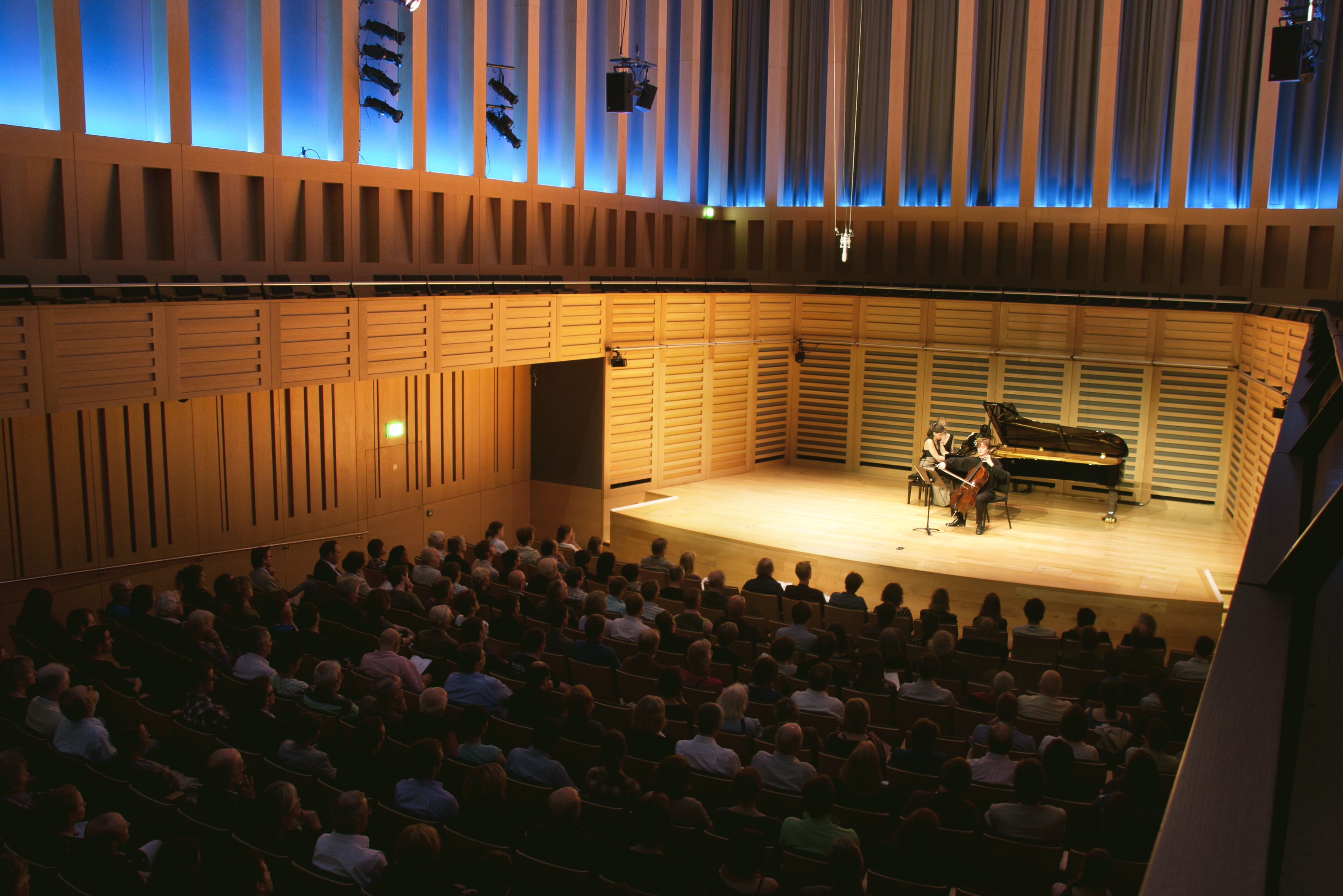
For the last few months, I’ve wanted to take Logan to see Maja in concert. I’m a firm believer that you can learn a lot by watching the experts live. Until now, we’ve had conflicting schedules but finally, this past Wednesday, we were able to attend Maja’s performance at the 35th Anniversary Concert of Live Music Now. It took place in Hall One at Kings Place (near Kings Cross Station) and featured performances by current musicians and distinguished alumni. Maja has worked with them in the past.

Live Music Now is a UK-based charity. Over the last three decades, it has conducted 50,000 participatory performances thus reaching over two million people with disabilities, the elderly and children with special needs. The charity hires young professional musicians out of music school, pays them a salary (one they can live on) and teaches them to use their talents for the benefit of those who are otherwise excluded from access to experiencing live music. In the states, I’ve heard of volunteers who do similar events but this charity takes it to another level with PAID professionals. We saw a short film showing the musicians in a classroom setting and one in an elderly home. It was heartwarming to see the smiles brought about by the fabulous music brought to their lives ~ even for a short while.

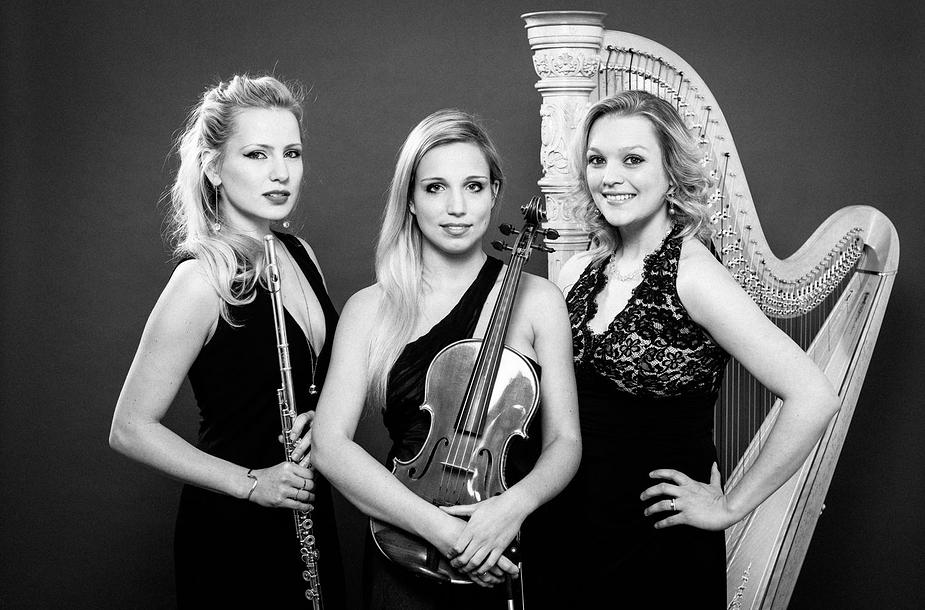
The concert was FABULOUS. It began and ended with the toe tapping harmonica/banjo duo of “Walsh and Pound” and all kinds of wonderful music in between. There was jazz, Spanish guitar, an opera singer, etc. Maja played in a trio called “La Mer Trio” ~ it consists of the viola, harp and flute. An interesting combination and they sounded so beautiful together.

La Mer Trio (Maja Wegrzynowska (Viola), Renate Sokolovska (Flute) and Hannah Stone (Harp)  Photographer: Grzegorz Golebiowski.

La Mer Trio: Maja Wegrzynowska (Viola), Renate Sokolovska (Flute) and Hannah Stone (Harp) (Photographer: Grzegorz Golebiowski)

Hall One at Kings Place (Photo Courtesy of Kings Place)

Hall One at Kings Place (Photo Courtesy of Kings Place)

Hall One at Kings Place was a pleasant surprise. I was a little worried since our seats were towards the back but there’s not a bad seat in the hall and the acoustics are wonderful. It’s attending events such as this remind me that I’m going to miss the heck out of London. If you get a chance to go to the 36th Anniversary concert next year, do so. It only cost £14.50 which was so worth it!

If you want to see La Mer Trio in concert, click here.

For more info on:

Kings Place upcoming events, click here.

Live Music Now charity, click here.

The Tutor Pages, click here. 

Stonehenge

I FINALLY made it to Stonehenge ~ it’s been on my “travel must-do” list for many, many years. There are more questions than answers regarding the reason Stonehenge was built. Lots of speculation but no definitive answers. The explanations for it being built range from “temple for human sacrifice” to “astronomy.” Due to the alignment of the stones, worship to lunar and solar beings is most likely (a Druid Temple). The circle is aligned with the midsummer sunrise, the midwinter sunset, and the most southerly rising and northerly setting of the moon.

More is known about the construction of Stonehenge. The original Stonehenge was a large earthwork or Henge which began about 3,100 BC. It consists of a ditch, bank, and the Aubrey holes. Aubrey holes refers to a ring of 56 mysterious circular cavities at Stonehenge and named after John Aubrey who discovered and recorded them in 1666.

The second stage of Stonehenge is thought to have occurred in 2150 BC. According to the Stonehenge website,82 bluestones from the Preseli Mountains in SW Wales were dragged to Milford Haven and then loaded onto rafts. These 4 ton stones were taken by water down the coast and then up the rivers Avon and Frome. They were then dragged overland again to outside Warminster in Wiltshire. Then, the final journey was mainly by water, down the river Wylye to Salisbury, then from Salisbury Avon river to west Amesbury. In all, it was about 240 miles.

The third stage: The outer circle was built around 2100 BC using Sarsen stones, which were from the Avebury area located about 25 miles north of Stonehenge. Some of these stones weigh 50 tons but the average weight is 25 tons. These stones couldn’t be transported by water so they had to use sleds. It is thought that it would have taken 500 men using leather ropes to pull one stone.

The final changes took place around 1500 BC when the bluestones were rearranged in a horseshoe and circle that is what we see today. Originally, there were around 60 stones in the bluestone circle but these were removed or broken up long ago. A few stumps are below ground level.

Experts estimate it took over 30 million working hours to built Stonehenge. Whew ~ I’m exhausted just thinking about it.

Stonehenge Closeup

Stonehenge II

Years ago visitors were allowed to walk amongst the stones but, due to the ever-increasing number of tourists, it was fenced off in 1978. Currently, there’s a walkway around the stone structure which still allows a very close up view. There is a parking area within easy walking distance to the stones but a new visitor’s center is being built and, once that is completed, visitors will have to take a shuttle to the site. English Heritage manages the area and hopefully they will continue to protect and preserve it.  There is a charge to enter the area (or you can peek in for free through the fence). If you plan to go, click here for all the latest rates and information.

Stonehenge sheep

Stonehenge Yellow fields

Surrounding Stonehenge is the beautiful English countryside with the yellow fields in bloom and, of course, sheep.

S Narrow Road

S graveyard

S Church

After Stonehenge, we visited a lovely English town called Sturminster Newton (Dorset County). To me, the town was quintessentially English with its thatched roof homes, narrow roads, old graveyards, stone fences, cute shops/pubs, etc.

S Church II

S Wall

This was an interesting wall ~ didn’t quite fit in with the rest of the town but interesting nonetheless.

At the local church, the minister happened to be outside greeting people as they came up for an event. I enjoyed walking around this quaint town and it reminded me that, as much as I love living in Central London, it’s so nice to get out to the countryside for a reprieve from the hustle and bustle.

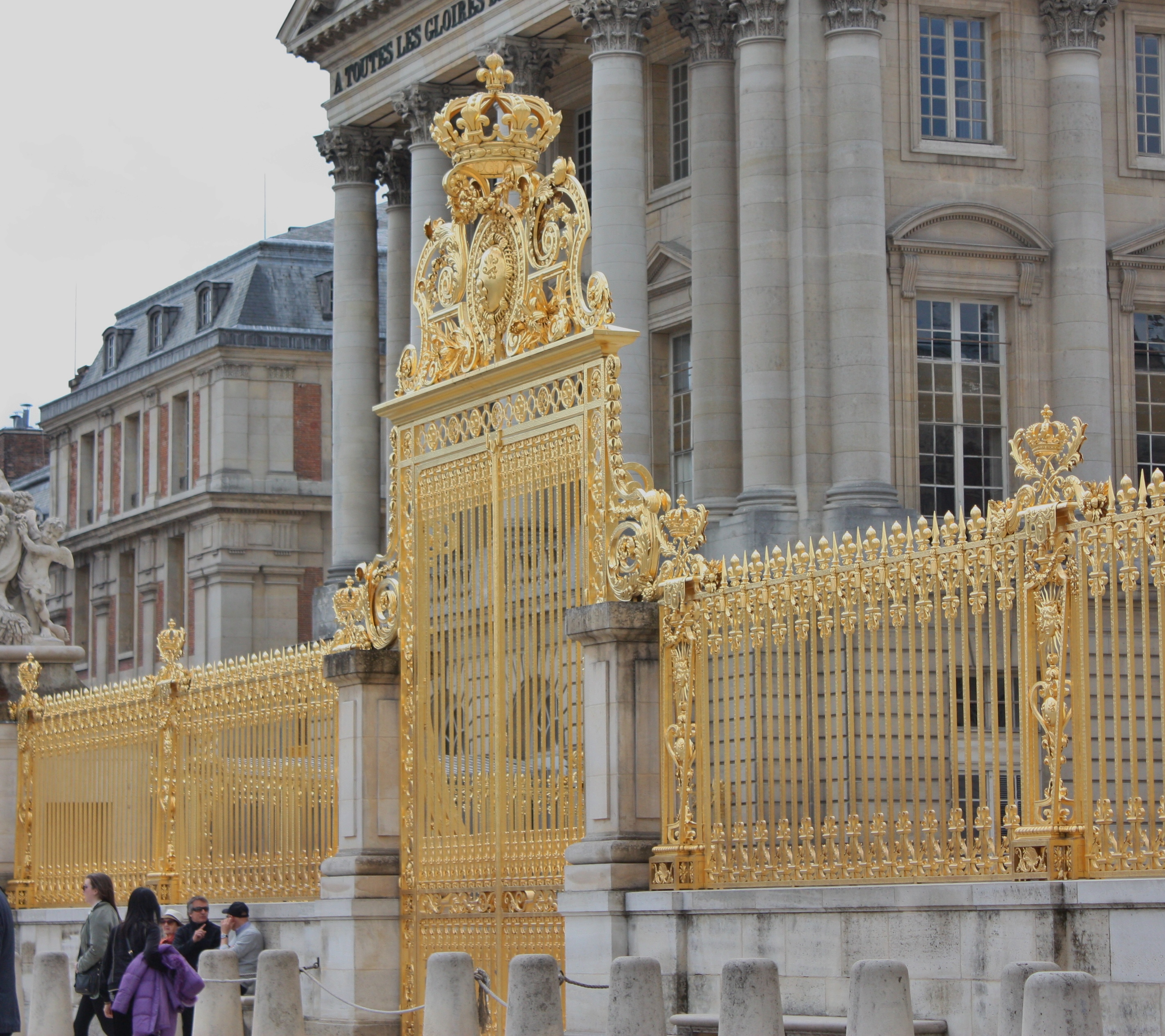
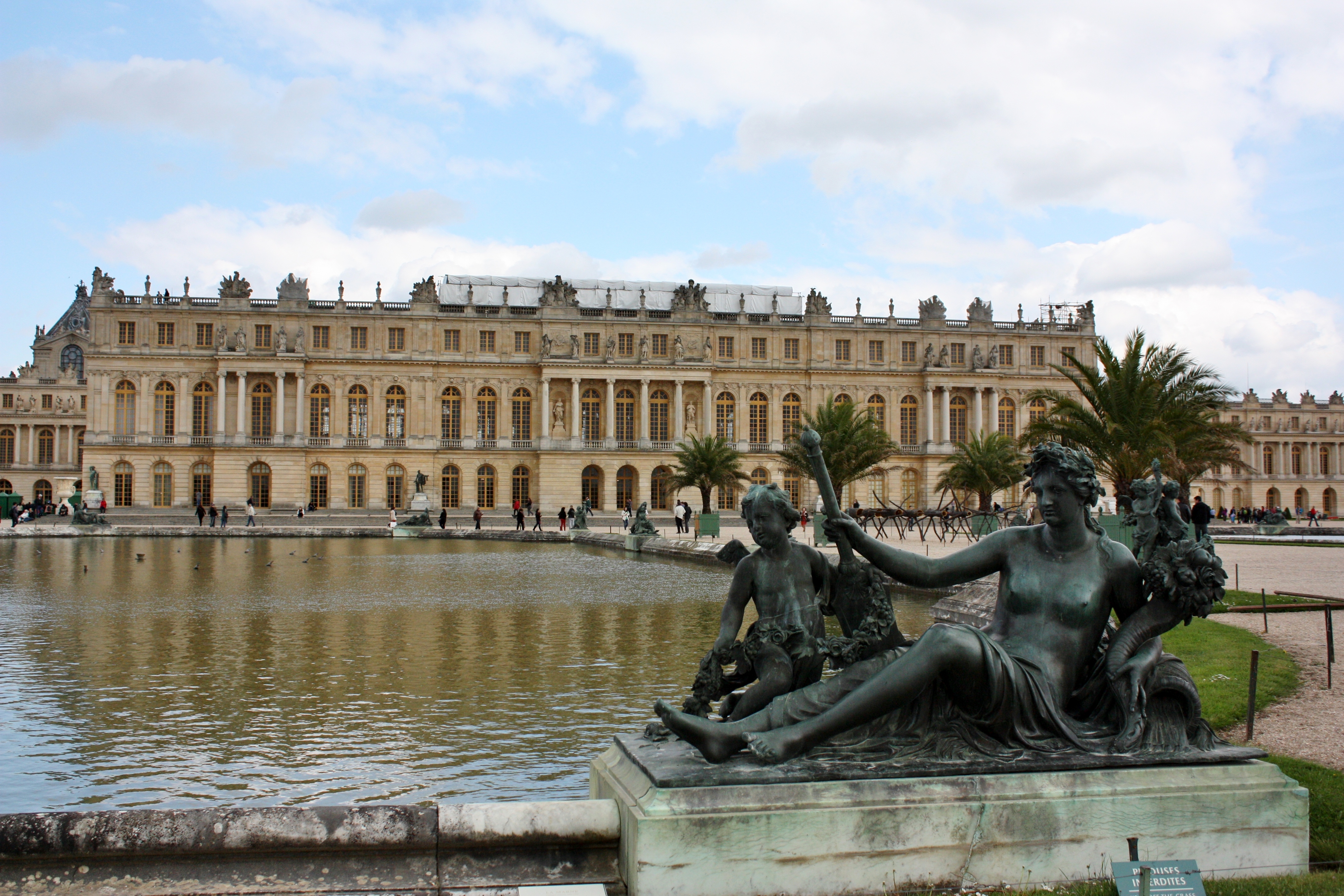
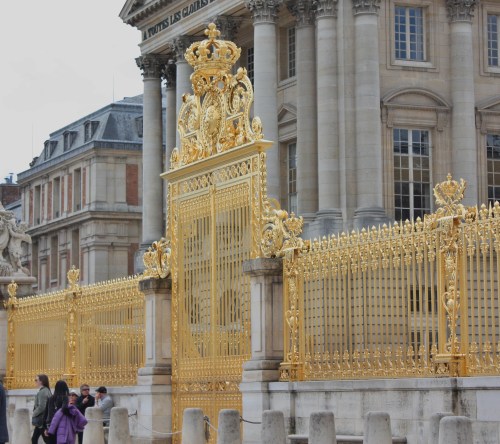
Gold Entrance Gate, Palace of Versailles, France

Gold Entrance Gate, Palace of Versailles, France

Versailles Gardens

My first recollection of the Palace of Versailles was in Junior High history class when we studied World War One. The signing of the Treaty of Versailles, which officially ended WWI, took place at the palace on 28th June 1919. Since then, I’ve read about and seen numerous documentaries about the French Revolution and, of course, the famous (or is it infamous) Marie Antoinette.

Versailles was the focal point of France’s Royal court from 1682 until 1789. It’s easy to envision it as a Royal Playground ~ Opulence is how most people describe it. It’s that and then some. It was built by Louis XIV because he wanted to remove himself and his courtiers from the intrigues of politics in Paris. It housed over 6,000 courtiers and, from what I’ve read, the gossip, jealousies and back stabbing would make a viper pit more enjoyable. By removing the nobles from Paris, it made Versailles very insular. That’s why I’m fascinated by General Lafayette who plays a part in the history of the palace of Versailles.

Marquis de Lafayette (Gilbert du Motier) went to Versailles at the age of 17. Even though he had a huge fortune and ties by his marriage to a powerful family close to Louis XVI, his independent spirit led him to a military career rather than a highly sought after court position.  He was impassioned with the American Revolution and secretly organized a voyage to the New World against the king’s wishes. Quite a bold move for such a young man. By the age of 20, Lafayette was a Major-General in the American army and a close friend of George Washington’s. I’ve read that George Washington treated him like a son. Lafayette helped the Colonial Army win several battles, including the Battle of Yorktown in 1781 ~ losing this battle led England to grant independence to the Americans. After his experience in the Americas, Lafayette returned to Versailles and was welcomed by the King and Queen. But the ideas of liberty he learned while in the US were not forgotten and in June 1789, he drafted the first Declaration of the Rights of Man, a document closely based on the Declaration of Independence. On 14 July, 1789, the storming of the Bastille occurred and he was appointed (again against the Kings wishes) as Commander of the French National Guard. He was responsible for keeping order in Paris and so he played a large role in the French Revolution’s early days. Although he was part of the revolution, he did save Louis XVI and Marie-Antoinette when people of Paris overran the château and killed the bodyguards defending the queen’s apartment. Although he saved them that day, he couldn’t keep them from being executed by guillotine in 1793. He was viewed as straddling the fence by both sides and fled France. In 2002, Lafayette was posthumously made an honorary citizen of the United States.

But let’s get back to the gorgeous Palace:

Versailles Hall of Mirrors (2)

Versailles Hall of mirrors

The Hall of Mirrors is a 235-foot ballroom lined with 17 floor to ceiling mirrors. The cost of these mirrors were staggering and, like the building of the rest of the Palace, the expenses drained the Royal coffers and sadly that meant not much left for the running of the country. It’s a very impressive room with chandeliers, statues, ceiling frescos and windows which open up to the gardens.
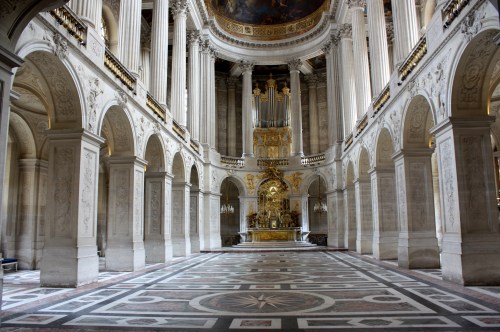
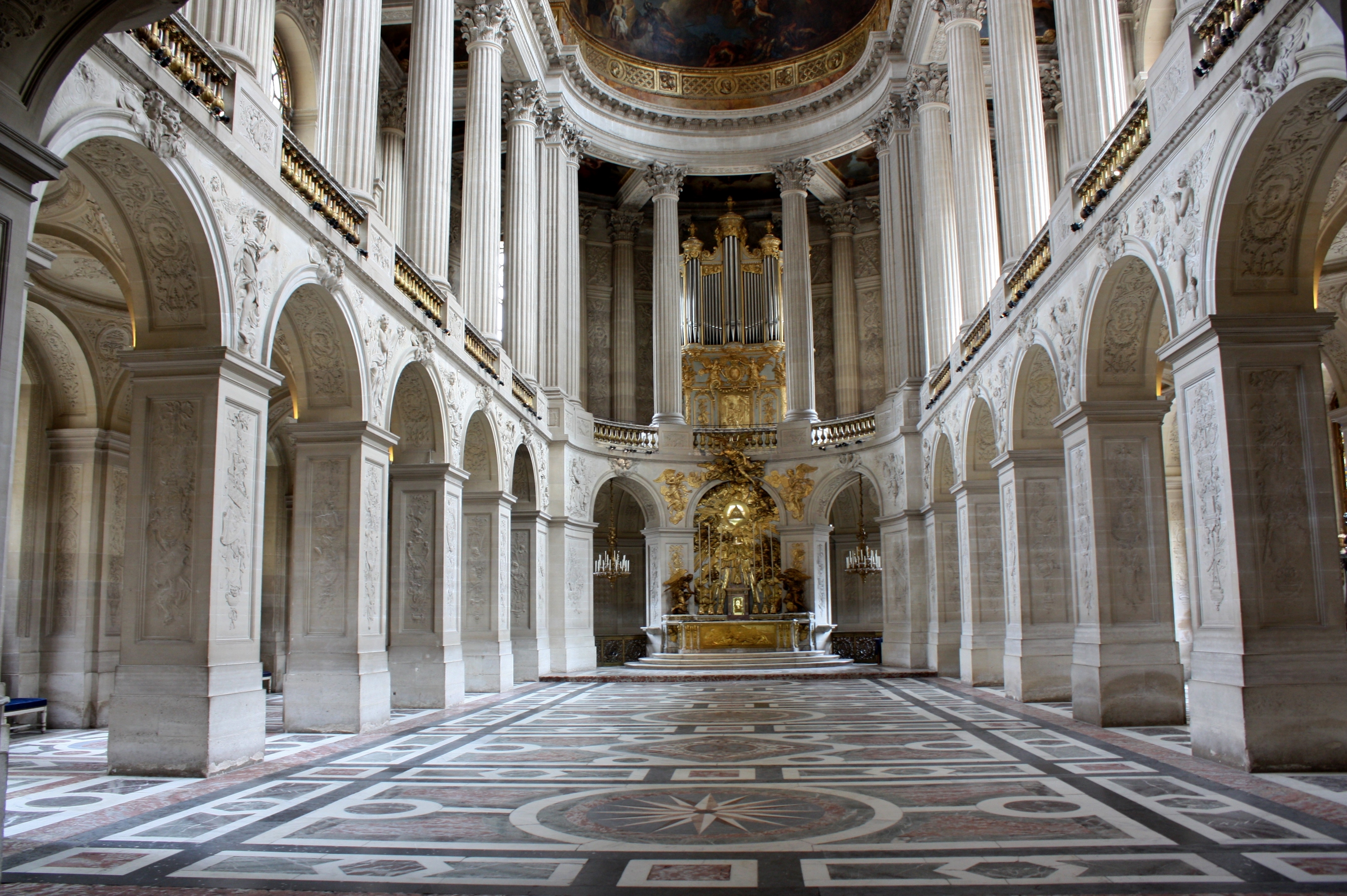
Chapel at Palace of Versailles, France

Chapel at Palace of Versailles, France

Louis XVI (age 16) and Marie Antoinette (age 15) were married in the beautiful White and Gold Royal Chapel in 1770. We weren’t allowed into the chapel which was OK by me since there were so many people visiting the Palace. It was nice to see the Chapel without anyone in it.

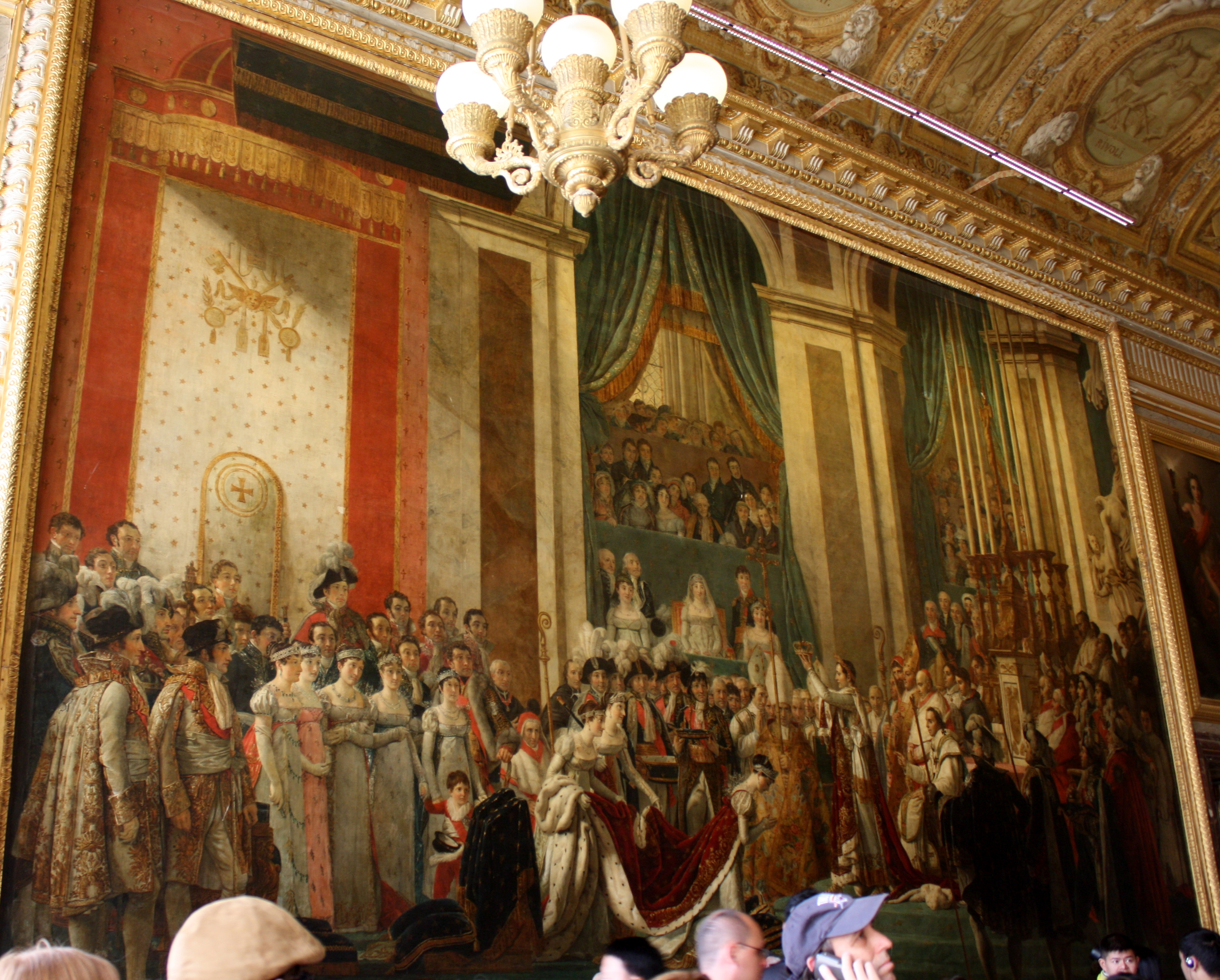
There were large paintings throughout such as this one :
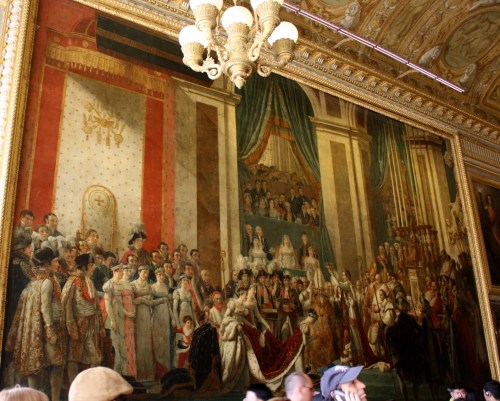
Coronation Painting at the Palace of Versailles
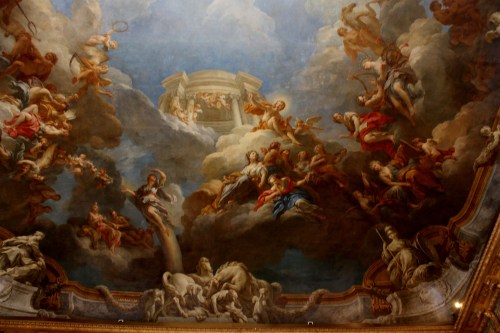
Coronation Painting at the Palace of Versailles

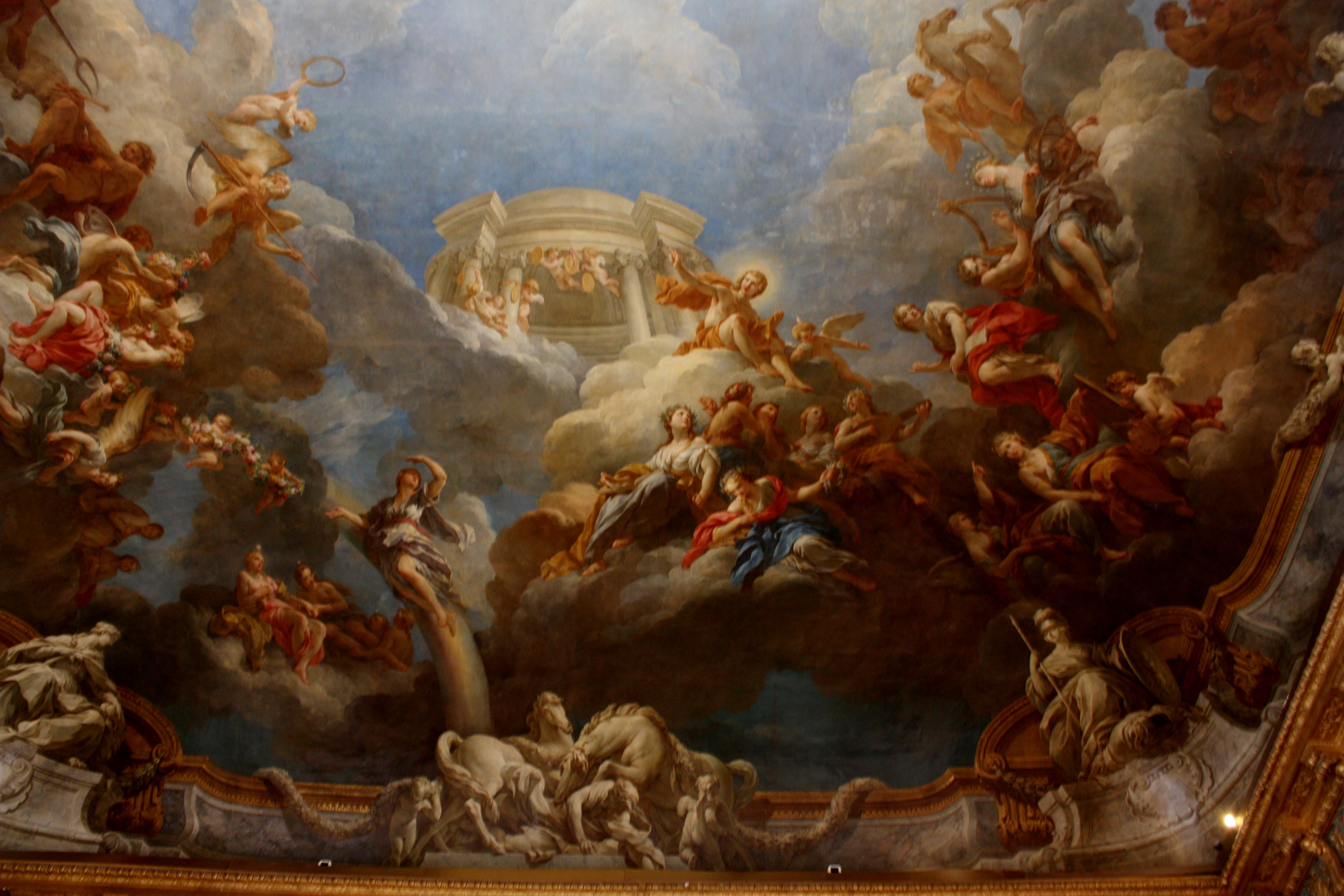
One of the ceiling paintings at Palace of Versailles

One of the ceiling paintings at Palace of Versailles

I was especially enthralled with the frescos on the ceiling ~ so much so I got a neck ache from looking up for so long. They are stunning!

Versailles The Battles Gallery

The Battle Gallery was interesting but, as I looked at the names on the marble busts, it was obvious I need to study a little more about French history because a lot of the names were unfamiliar to me.

Large Fireplace at Palace of Versailles

Large Fireplace at Palace of Versailles

Versailles the Queens Bedroom

The Queen’s Bedchamber ~ not very cozy!
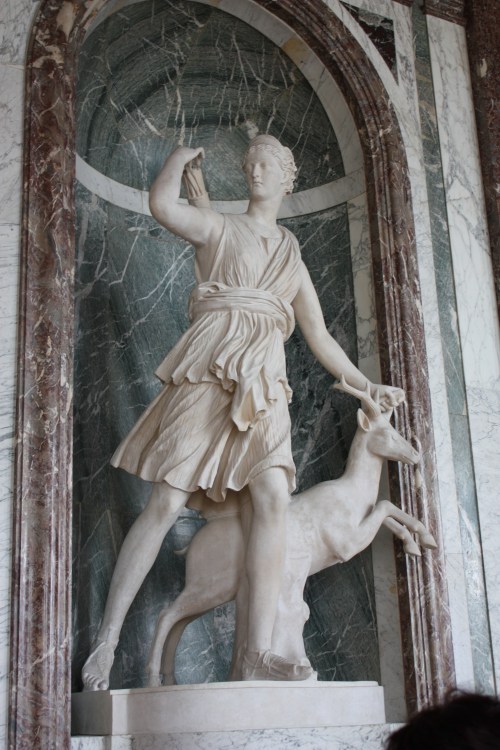
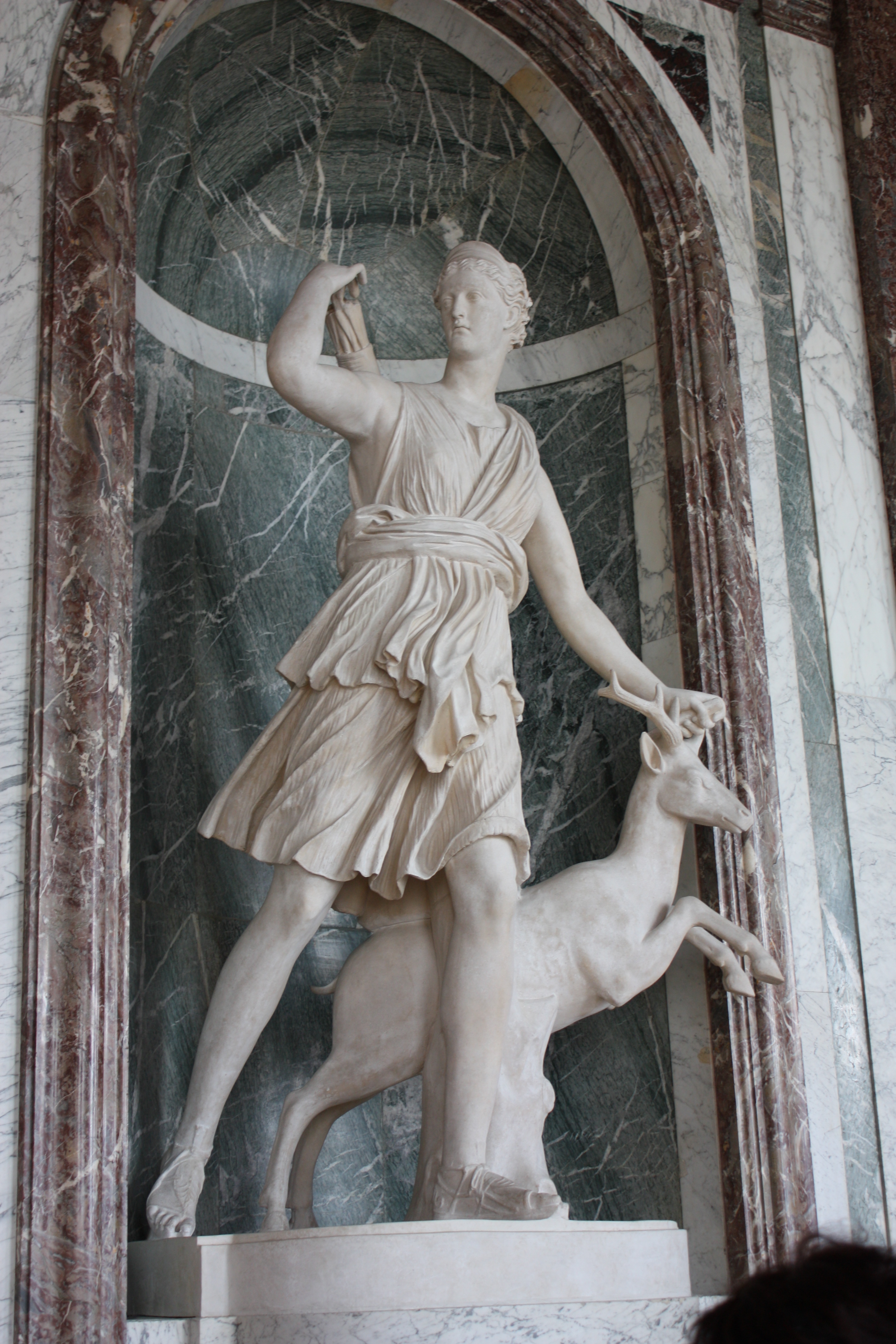
Statue of Artemis (Diana), Palace of Versailles

Statue of Artemis (Diana), Palace of Versailles

Versailles View of the gardens

Looking out to the Gardens ~ so beautiful.
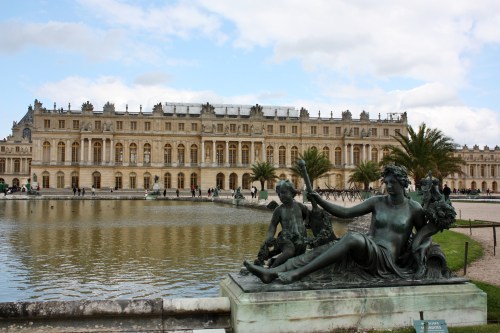
Gardens at the Palace of Versailles
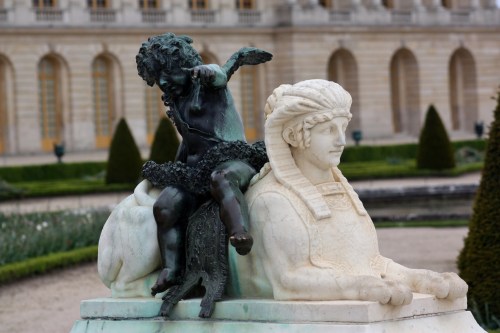
Gardens at the Palace of Versailles

Statue in the Gardens  of Versailles

Statue in the Gardens of Versailles

Versailles Gasrdens and pond

Versailles Gardens Little angels on garden urn

Loved these plant urns ~ unfortunately, they weren’t for sale in the gift shop.

It truly was sensory overload for me. I got to see a lot of the Palace and a little of the gardens but I feel I only touched the surface. We were limited on time and both of us didn’t want to miss the gardens so I felt a bit rushed the whole time I was at the Palace. I’m calling this visit a preview and will leave it on the “return visit” list. I would love to go back sometime when I can spend a day or two exploring the Palace.

With both John and Logan on their own travel adventures, a friend and I decided to catch the Eurostar train to Paris and Versailles for a day trip. Paris is a little over two hours from London so it makes for an easy to get there day trip. I visited Paris once before in 2004 and enjoyed seeing the familiar sights again. We decided to go with a fully escorted tour thinking it would save us the trouble of having to deal with purchasing tickets for Eiffel Tower and Versailles nor deal with transportation. In hindsight, I’m not sure it was worth it since we got stuck in severe traffic jams several times throughout the day (train and metro would have been so much quicker) which cut-in to the time we had to enjoy Paris. Ah, well…live and learn.

The Eurostar left London at 7:00am and we were in Paris at 10:15am. France is one hour ahead. It was my first time on the Eurostar and I was impressed. It was clean, on time and there was a decent selection of food/drinks.

Our first stop was the Eiffel Tower:

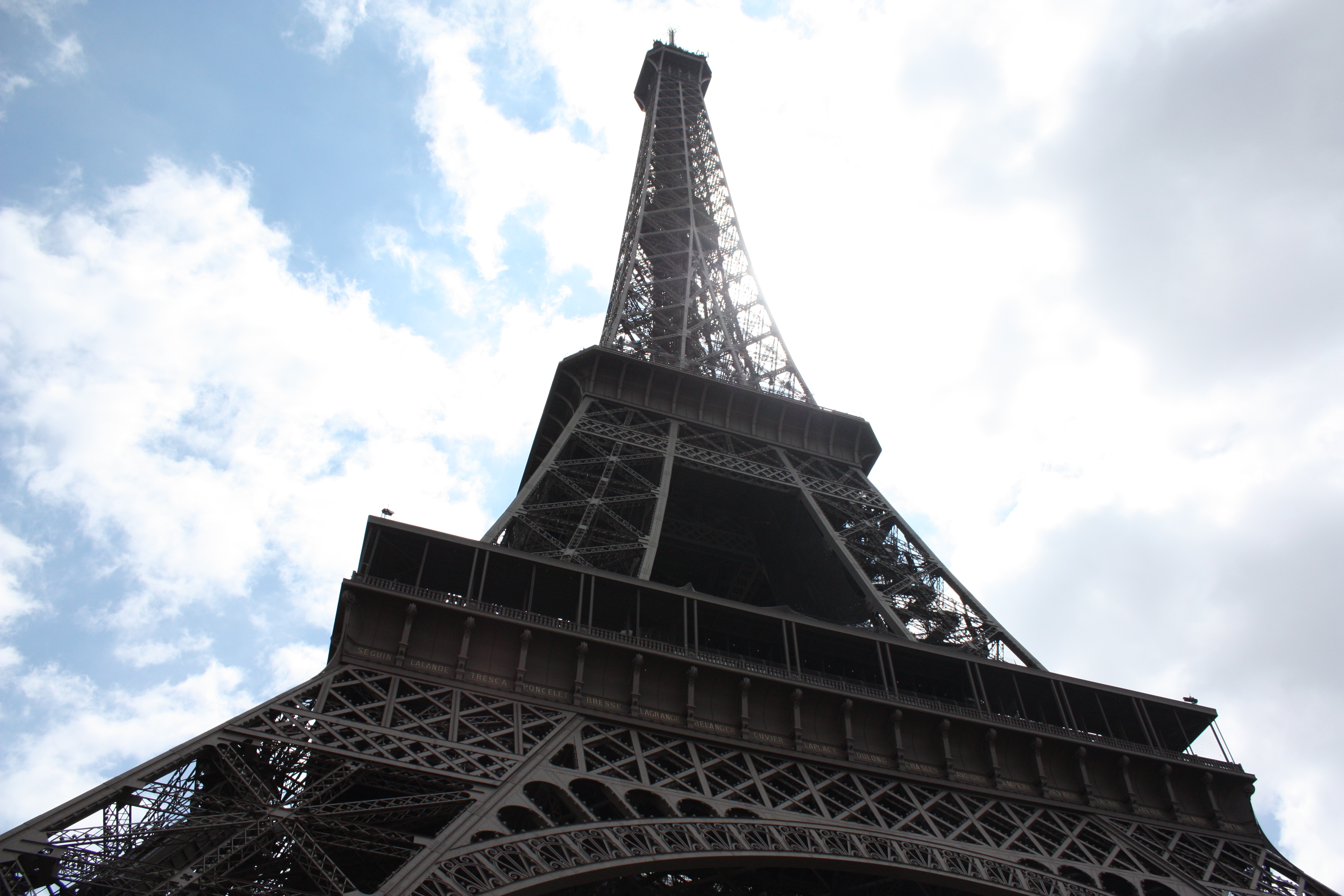
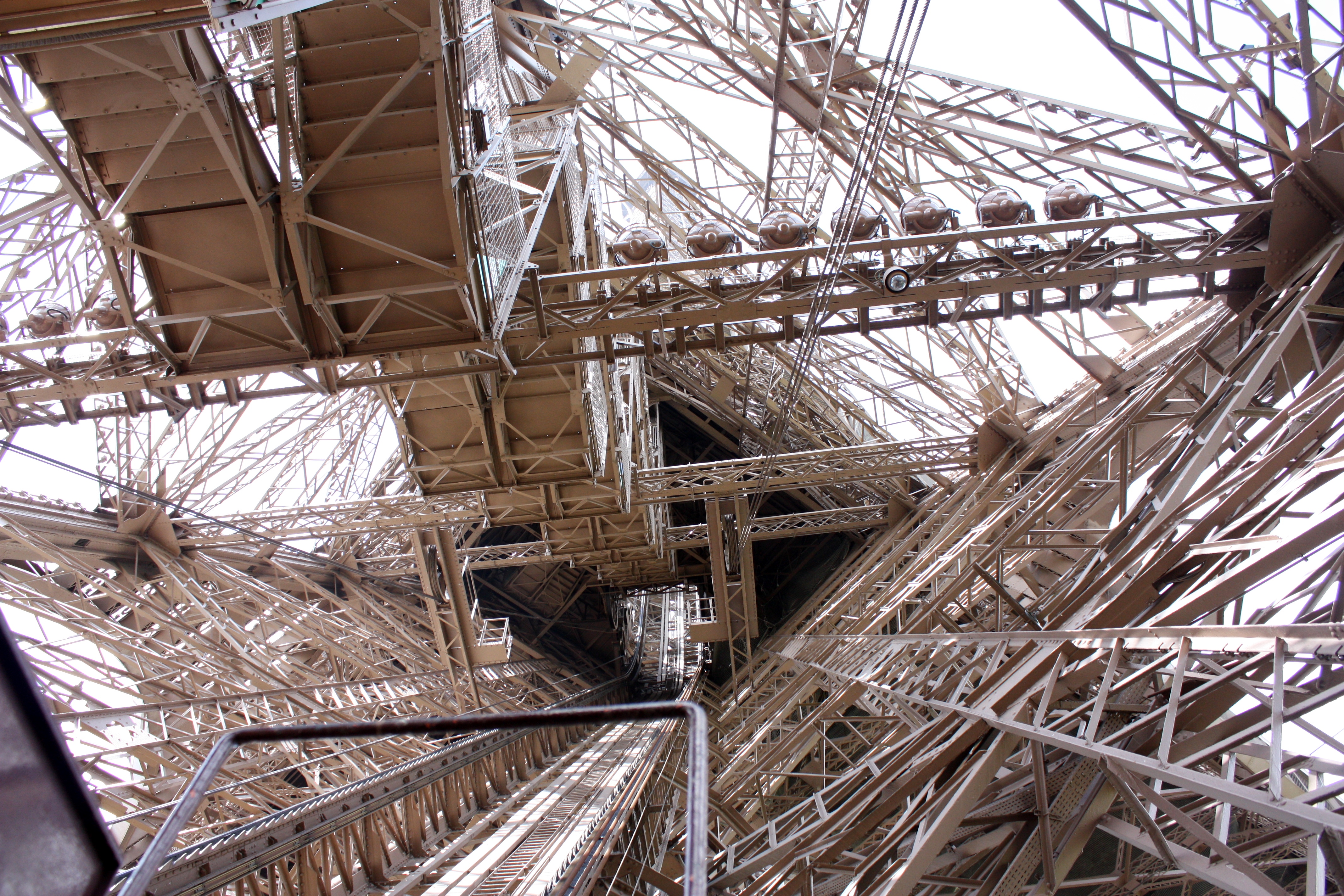
Looking up the Eiffel Tower, Paris

Looking up the Eiffel Tower, Paris

Inside the Eiffel Tower, Paris

Inside the Eiffel Tower, Paris

The Eiffel Tower was built by French engineer Gustave Eiffel for the 1889 World’s Fair (Exposition Universelle ). It was built to celebrate the 100th year anniversary of the French Revolution as well as demonstrate France’s technological advances in the Industrial Age. The construction took 2 years, 2 months and 5 days and the result is a very impressive technical and architectural achievement. Although the panoramic views from the 2nd floor are wonderful, I also love looking up into the inside of the tower from the ground level.  Originally the Tower was built to last only 20 years but when the first radio transmissions were sent from the top of the tower, it became a permanent structure. Even for the people who opposed keeping it (many considered it an eyesore), the practical uses of the Tower outweighed the insult to the Frenchmen’s sense of aesthetics.  Good thing for Paris since each year, almost seven million visitors make the trek to the Eiffel Tower.
View of the Seine River, Paris, France

View of the Seine River, Paris, France

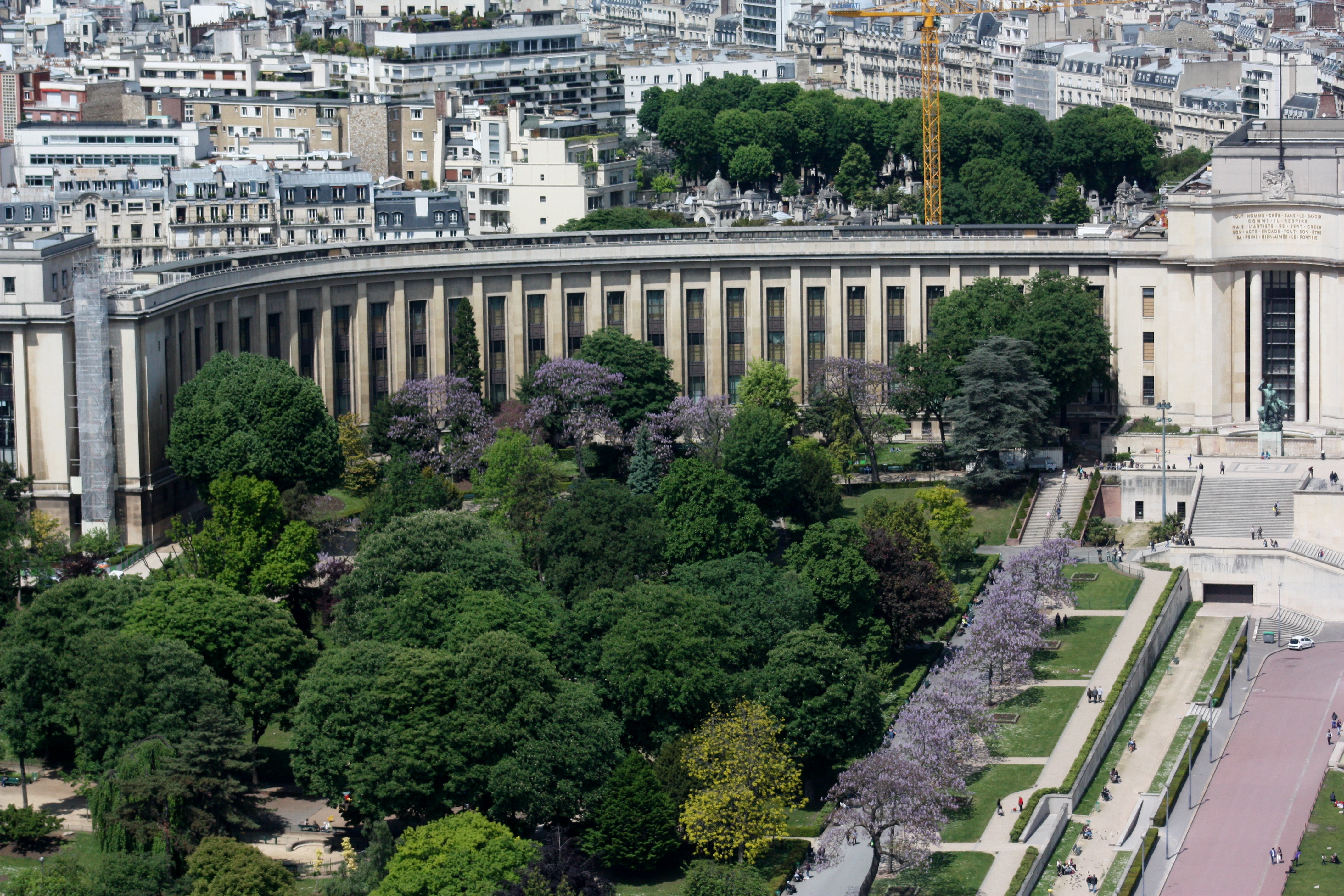
View from 2nd Floor of the Eiffel Tower

View from 2nd Floor of the Eiffel Tower

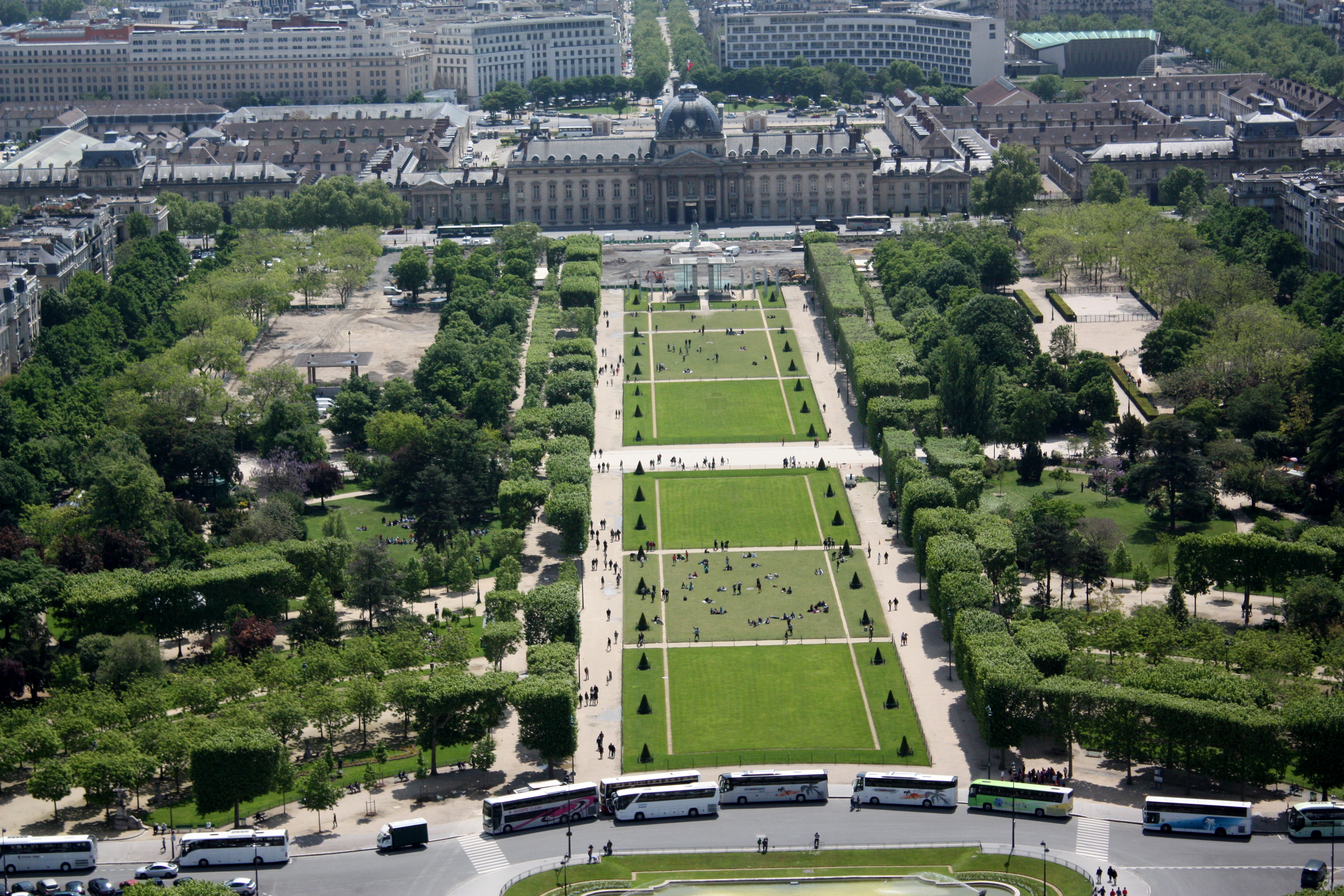
View of the gardens from the Eiffel Tower

View of the gardens from the Eiffel Tower

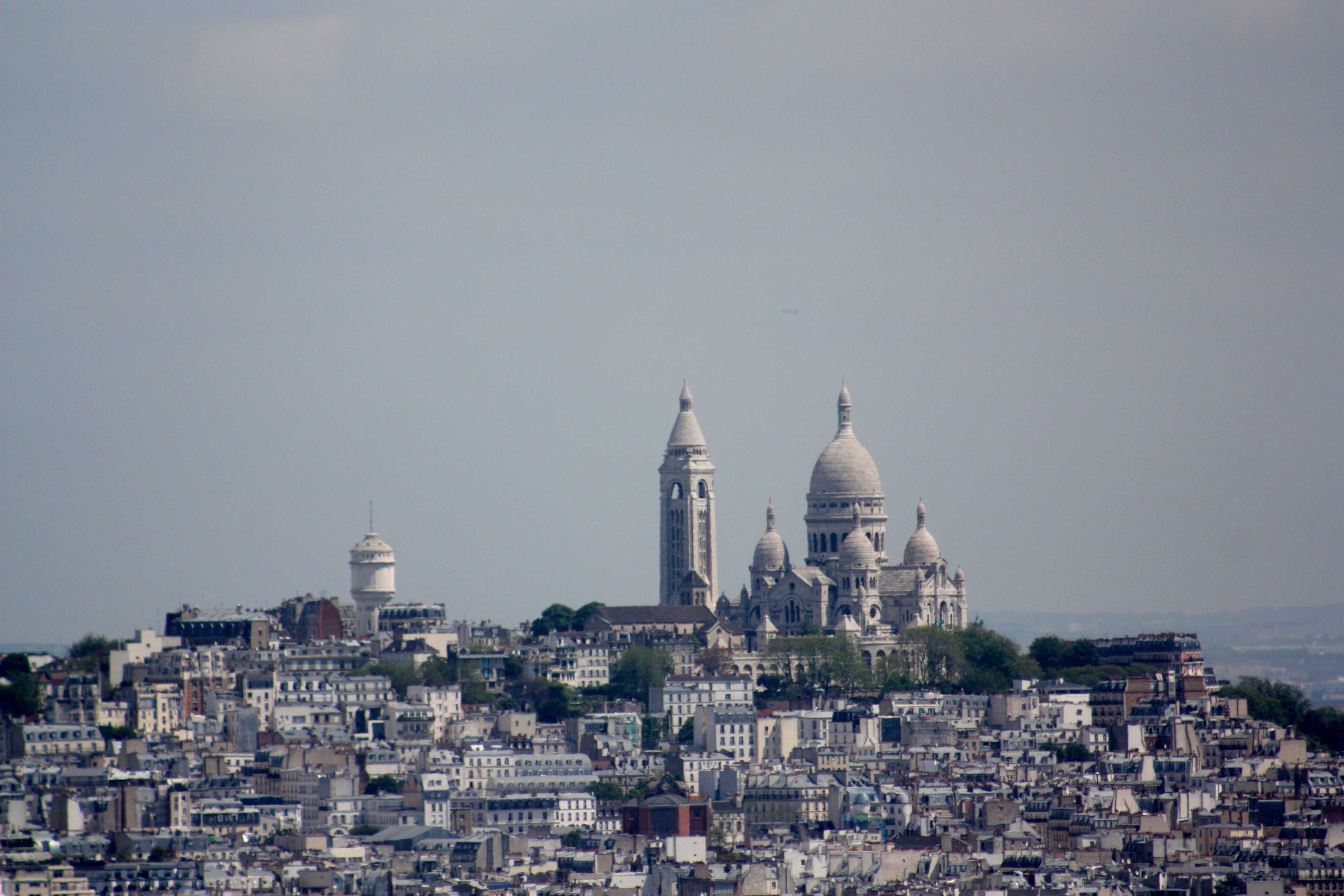
Another view from the second floor of the Eiffel tower

Another view from the second floor of the Eiffel tower

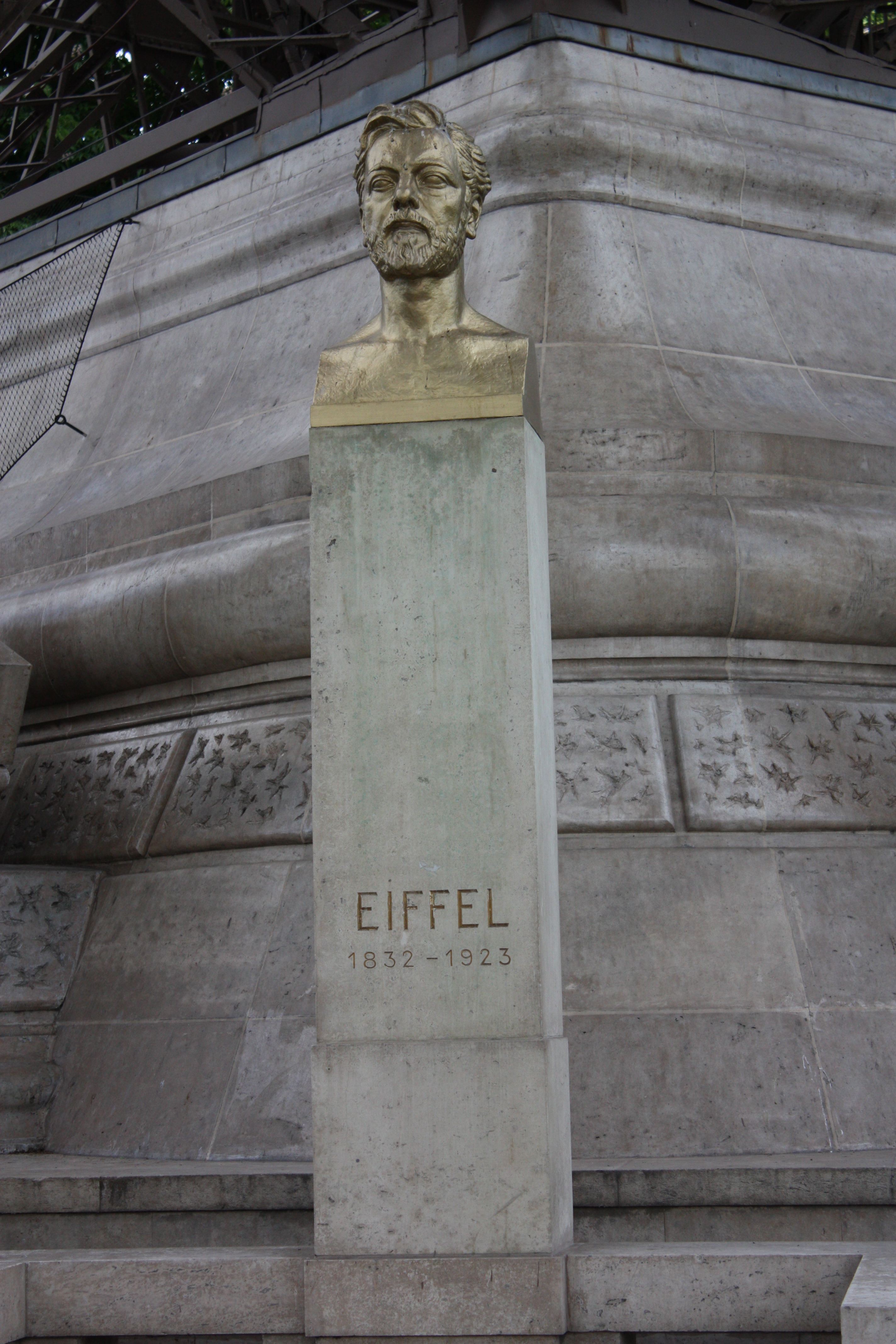
Statue dedicated to Gustave Eiffel, Paris

Statue dedicated to Gustave Eiffel, Paris

On my last visit to Paris, I was able to see the tower lit up at night but it stays light too late into the evening for us to see it this time.

A few sights from around Paris:

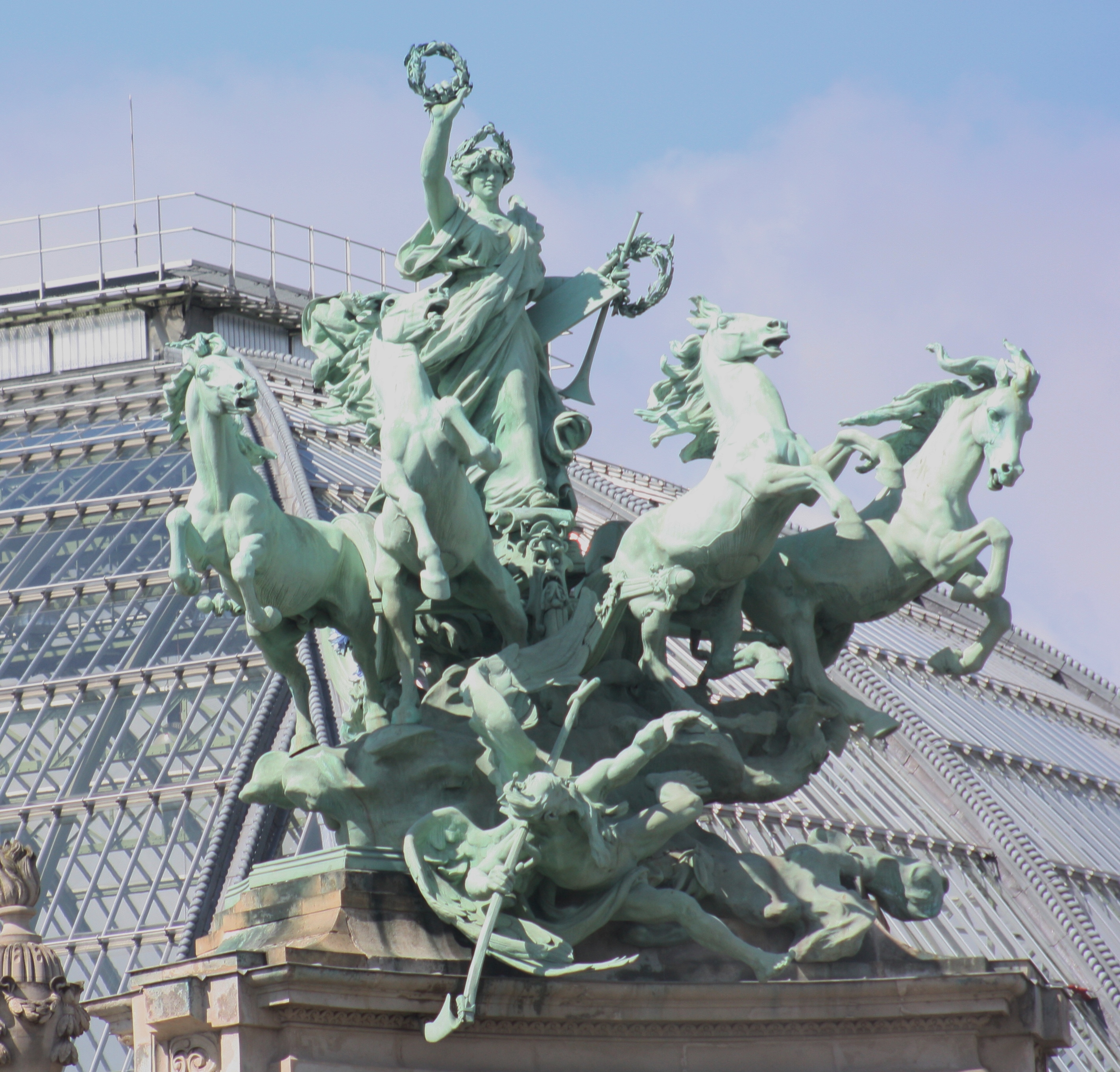
Statue in Paris

Statue in Paris

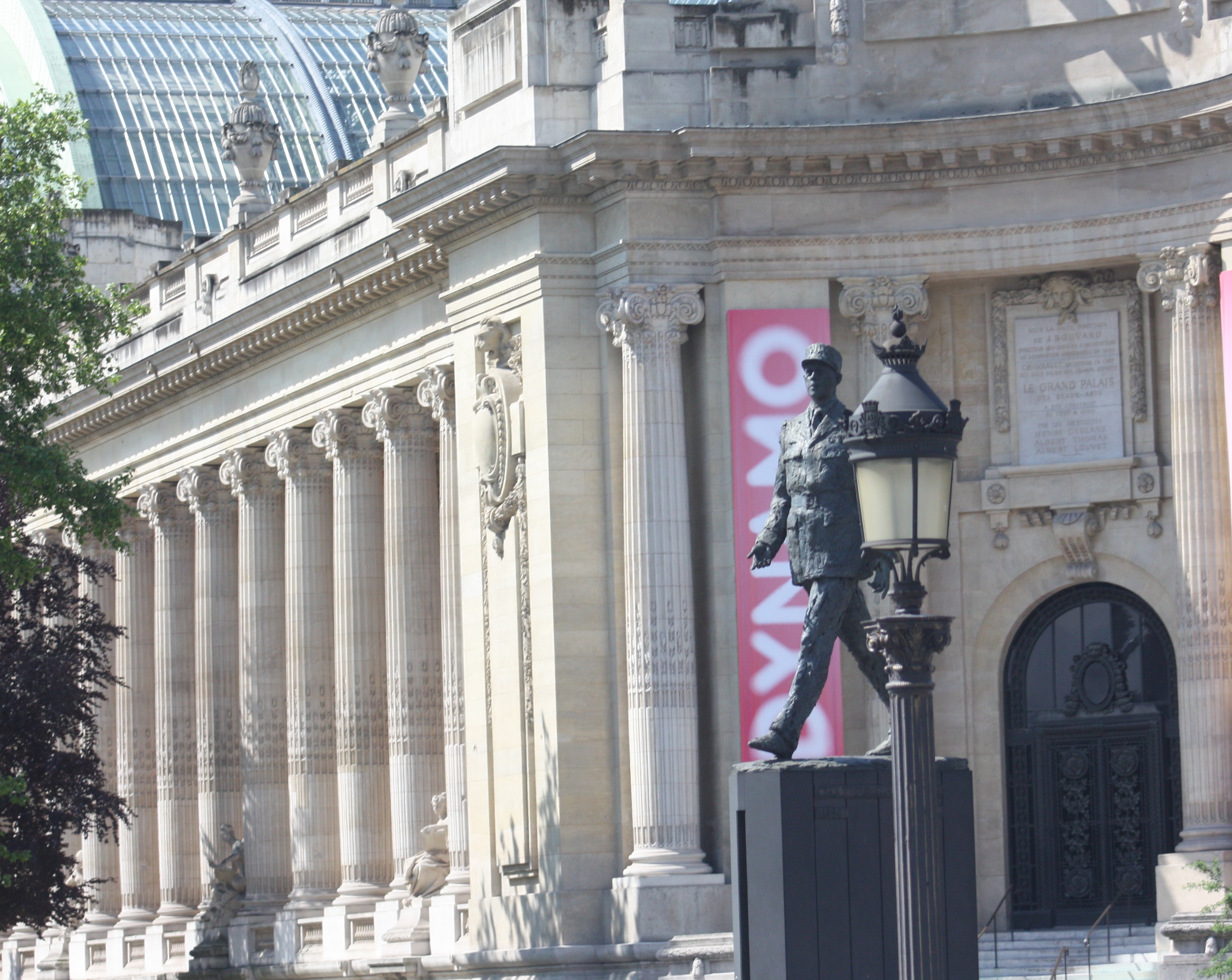
Paris, France

Paris, France

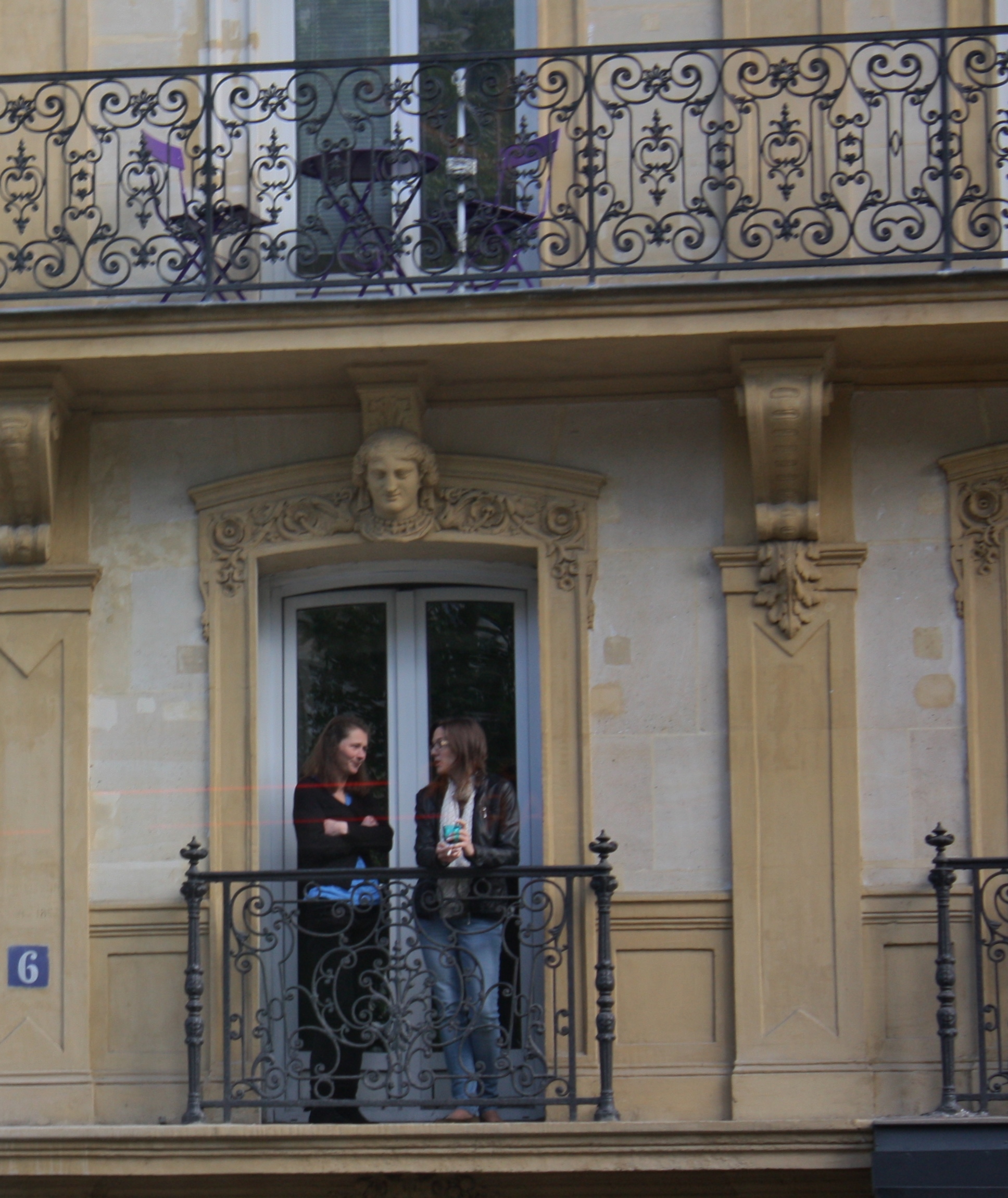
Balcony Smoke Break, Paris France

Balcony Smoke Break, Paris France

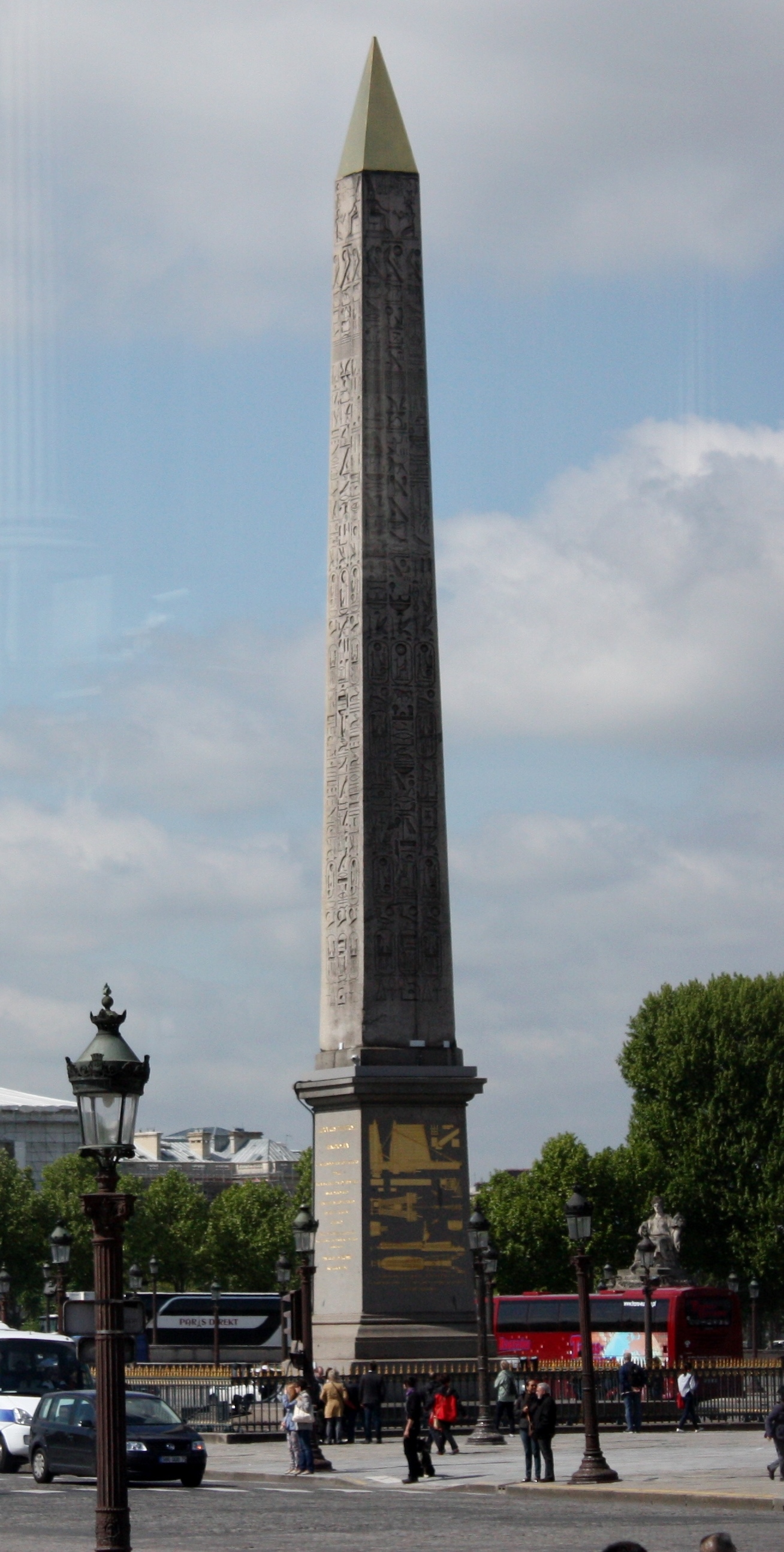
3,300 year old Obelisk of Luxor, Place du Concorde

3,300 year old Obelisk of Luxor, Place du Concorde

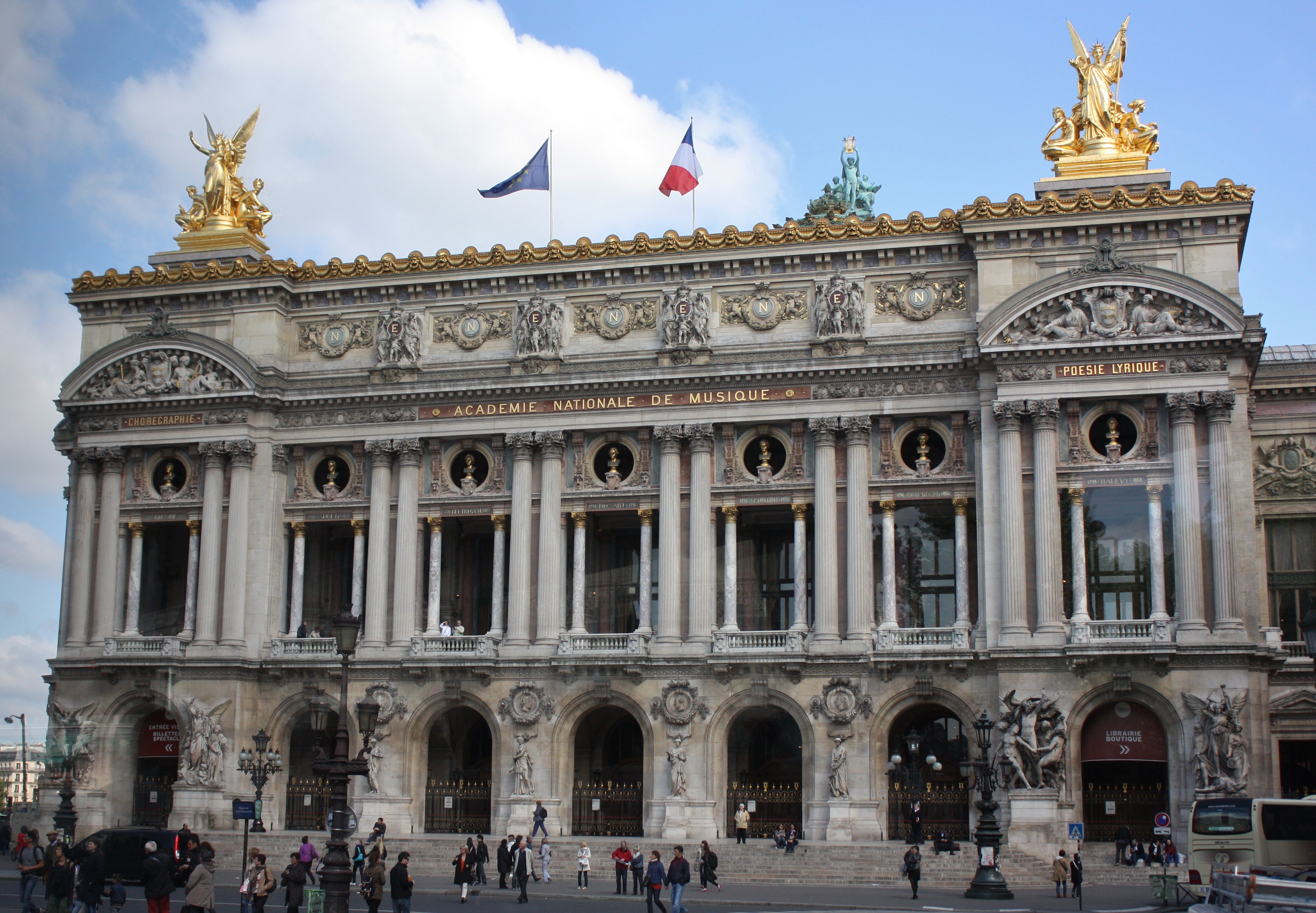
Music Academy in Paris

Music Academy in Paris

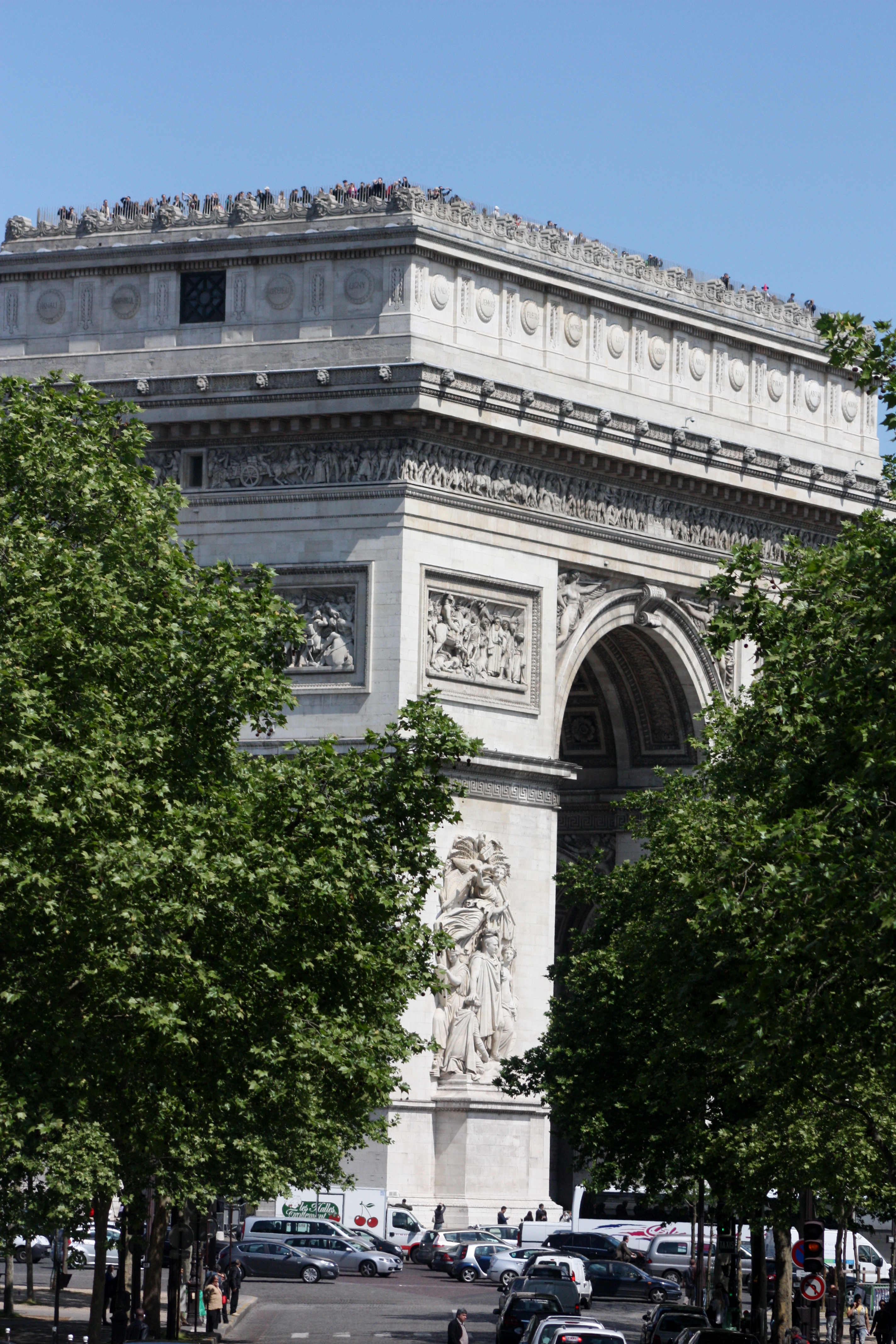
Arc de Triomphe

Arc de Triomphe

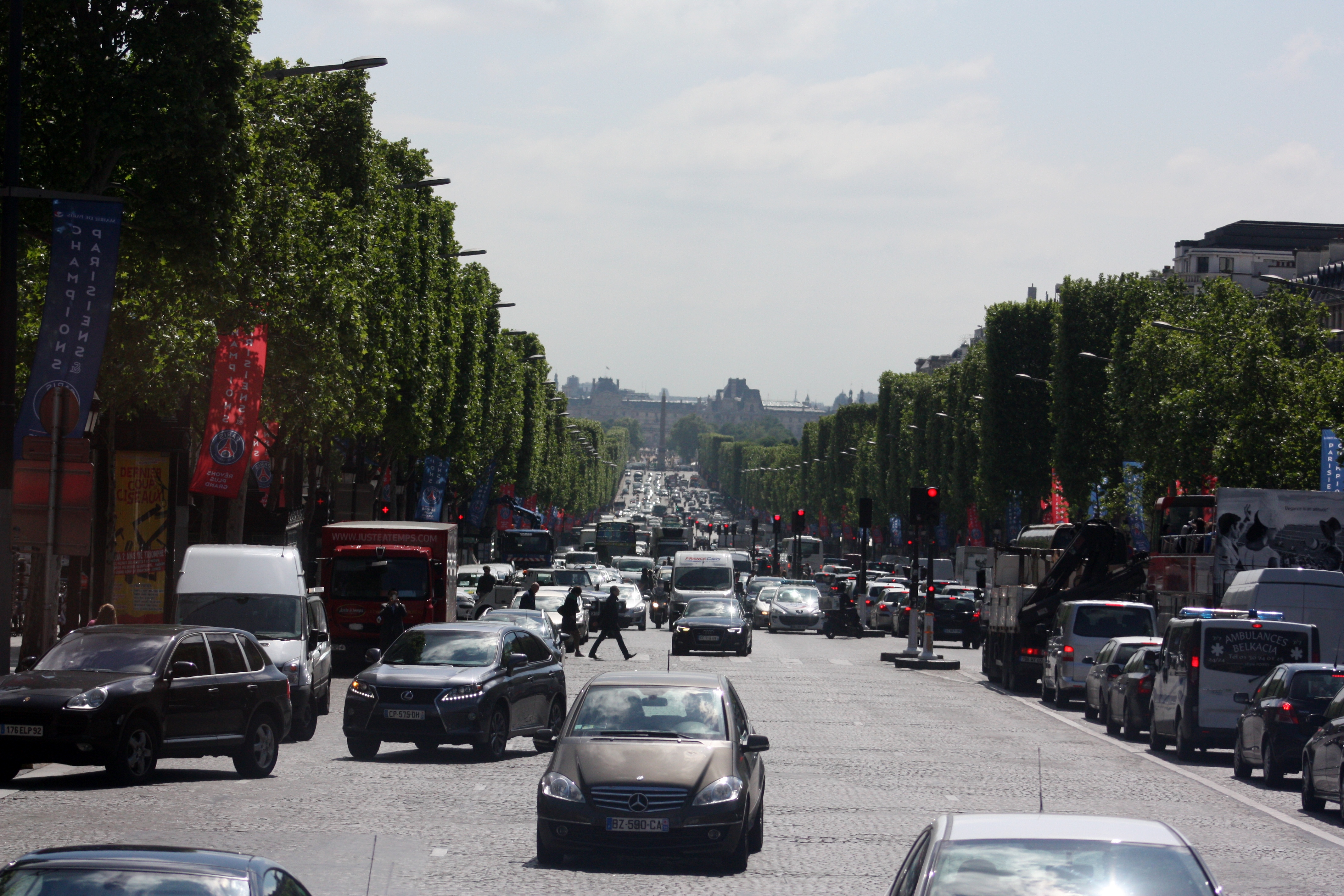
Champs Elysee, Paris, France

Champs Elysee, Paris, France

After touring the Eiffel Tower and a quick bite to eat, it was time to journey to the Palace of Versailles but more about that in the next post…

Guest Blogger: Logan, 15 years old

We are frequent visitors to Regent’s Park, many times as a short cut to a friend’s flat in St Johns Woods. A couple of weeks ago, we came across Gorilla Circus ~ Flying Trapeze School. They are located at the corner of Outer Circle Rd and Avenue Rd on the north side of the Regents Park. The closest tube station is St Johns Wood (Jubilee Line).

We stopped to watch the school for a moment but ended up staying longer since we were all mesmerized by the wanna-be acrobats swinging through the air. I could tell John and Logan were tempted. Me, not so much ~ I have limited upper body strength. Logan made arrangements for a class which took place yesterday. She agreed to be a guest blogger and here’s her story:

After seeing the Flying Trapeze School, I was interested in going but hadn’t looked into it any further. Coincidentally, my friend said she went to the school and loved it. She asked if I wanted to go with her and she made the arrangements for a class which was yesterday. The maximum number of students is 10 and we had 9 in our class. They told us we would have a warm-up, practice on the lower bar and then we would go on the flying trapeze.

First, we did basic warm up which included jumping jacks, stretching side to side, running in place and a few balance exercises. Then everyone went over to the lower bar, they explained we would hold the bar, bring our legs up, hook our legs onto the bar and reach back. There were two people helping everyone up on the lower bar so don’t be intimidated if you feel you wouldn’t be able to lift yourself onto the bar. 

The instructors worked with you on your level of expertise so if you are more experienced, they offer more difficult “tricks.” Having never been on a trapeze, I was at the beginner level with the majority of the class. After my turn on the lower bar, they hooked a safety belt around my waist and we walked towards the ladder. It was very fast paced and I was worried I wouldn’t be able to do it but most of the people were worried too so it was reassuring. A few people wore jeans which I think made it more difficult. It’s better to wear tights/leggings.

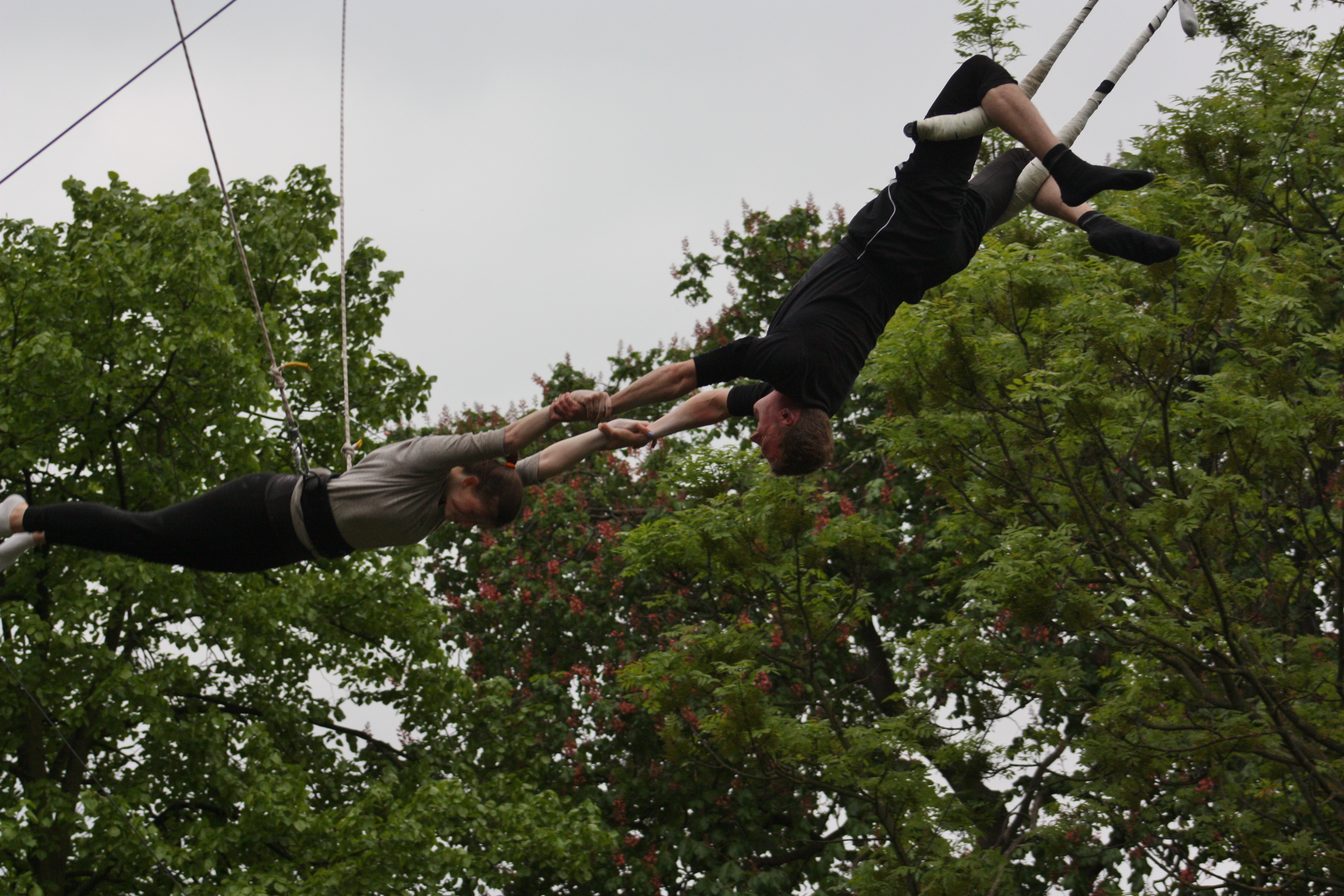
We were briefed as to what would happen on the flying trapeze along with commands that would be called out. A person from the class was chosen to be an example and the instructors called out the commands which were:

  • Ready: bend your knees
  • HUP!: Gently jump from the platform with your arms extended straight out (locked arms) 
  • Tuck: put your legs onto the bar
  • Release: drop your hands and reach out

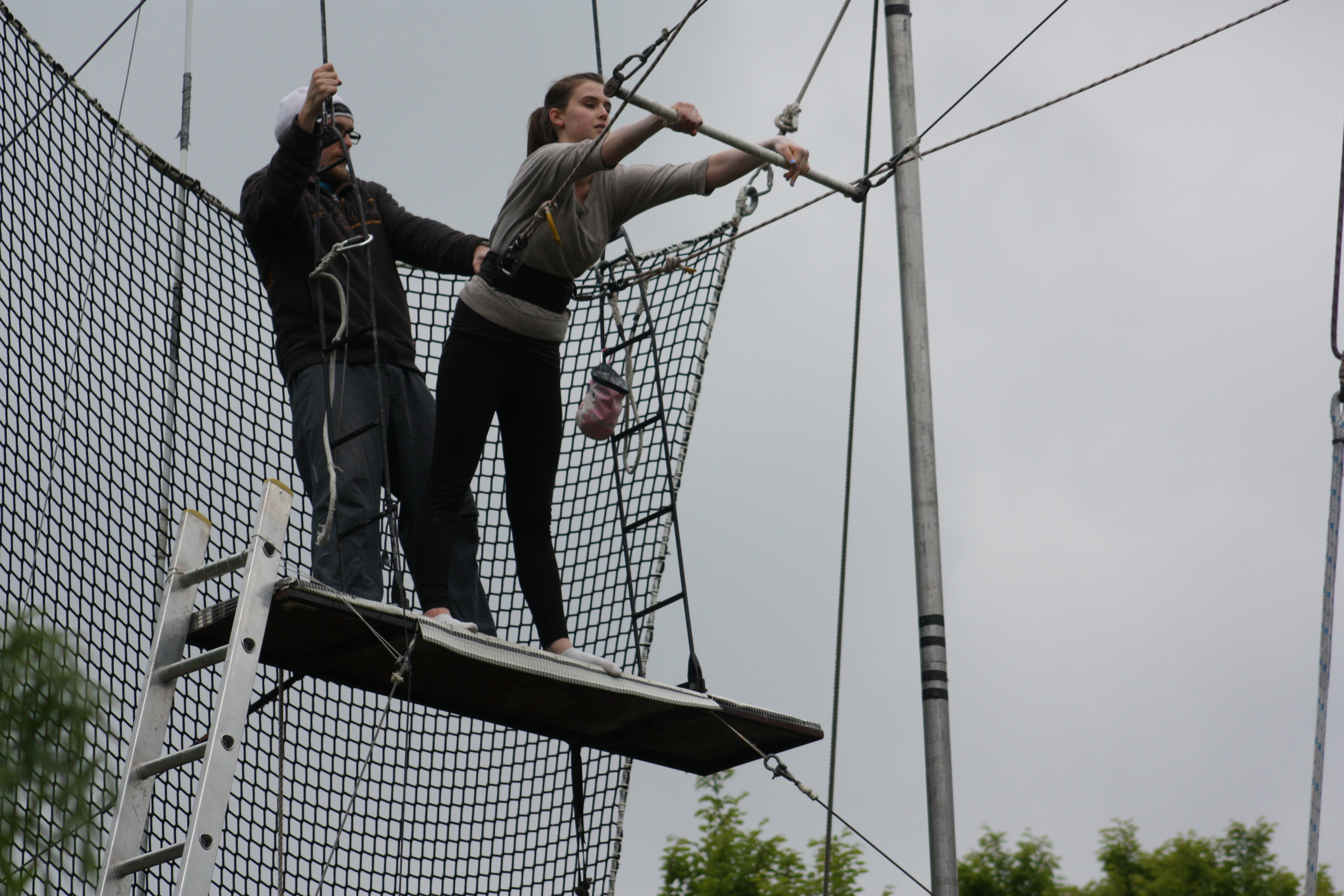
After the lower bar practice, we waited for our turn. I was nervous but concentrating on watching the other people so I could learn from them. Climbing the ladder turned out to be the scariest part of the whole thing but you’re hooked to a rope just in case. Once at the top, there’s a platform assistant who hooks you into the safety ropes and he holds onto the back of your belt so you don’t fall off the platform while reaching for the bar. The bar is heavy so reaching out to grab it is difficult because it felt like it was going to pull me right off the platform. Thankfully, the platform assistant was strong enough to hold me back. I followed the commands and “hupped” ~ I’m very happy they don’t say jump because that sounds more terrifying to me. “Hup!” seemed much less scary.

Grabbing onto the bar

Grabbing onto the bar

Ready To Fly

Ready To Fly

HUP!

HUP!

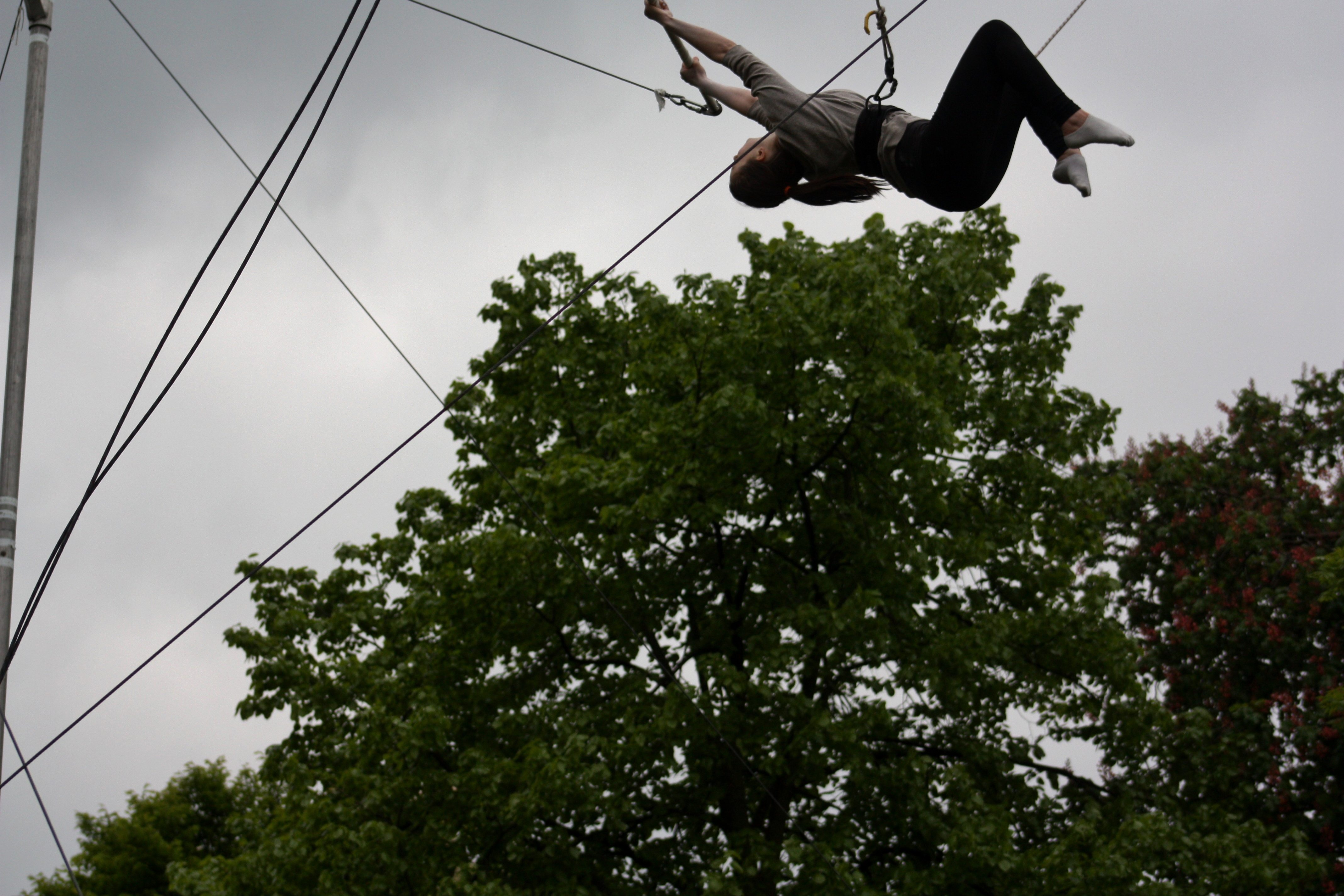
Knees Hooked

Time to get those knees hooked!

Hands Off, Arms locked and reaching

Hands Off, Arms locked and reaching

Success....

Success….

Flying Trapeze

Flying Trapeze

It was thrilling and I’m happy I did it. I want to go again. It’s an interesting work-out but the instructors are all very nice and supportive. There were all different age levels in our group. The minimum age is 8 years old but no maximum age. If you don’t “get it” on your first try, there’s usually time for another attempt.  I think my parents would enjoy it so I’m hoping to go again with them.

I have to admit, watching my 15-year-old be brave enough to do the Flying Trapeze has at least peaked my interest in wanting to try it. Since it seems very safe and the instructors didn’t “shame” anyone who missed the “hand off”, I might go just for the fun of flying on the bar.  If you’re interested, click here for all the pertinent details and let me know how you like it.

Book Of Mormon in London

The only West End Show John has begged repeatedly asked me to get tickets for is “Book of Mormon” which opened in February 2013. By the time I checked for tickets, the show was sold out through the summer with only a few very expensive seats available on third-party ticket sites. Last Tuesday, he decided to go to the box office to see if there were any same day tickets to be had. Turns out they have a lottery everyday for FRONT ROW seats. Here’s the deal: A lottery application has to be filled out at the Prince of Wales theater 2.5 hours prior to the start of the show. At 5 pm, John filled out his lottery application (photo ID is required). At 5:30pm, two hours before the show, they drew names from one of those rolling cages. It’s all very exciting as the names are called out. John went on a Tuesday, there were 21 tickets available for about 100 hopefuls and, “Hallelujah Joseph Smith”, John was the sixth person called for two tickets. The winning tickets are only £20 each. Quite a deal for any West End show but especially for this very extremely popular one.

The lottery in progress...

The lottery in progress…

John will his winning ticket

John with his winning ticket

Review (hopefully without any spoilers but I will mention a specific line and song titles)

Front row is not always considered the best seat in the house because you get a myopic view of things but I love to see the actors up close ~ sweat, spit and all. I’m in awe of those who can perform on stage night after night with such precision and energy. “Book of Mormon” did not fail in any aspect. The actors, music, energy, set were all top-notch.

The play was written by the creators of South Park and it’s a religious satirical musical with plenty of clever lyrics and catchy tunes to keep your toes tapping. My favorites are “Turn it Off” and “You and Me (but Mostly Me)” which both John and I find ourselves singing frequently around the house. But mostly John.

Having lived in an area of the US with a lot of Mormons, I caught the little detailed nuances regarding the culture and terminology  of the Mormons but it seemed everyone in the theater enjoyed the show even the older Spanish-speaking man sitting directly behind me. During the opening number of “Hello” with the Mormon Boys, it had me wondering where they found so many Mormons who could act and sing. Even their twinkling eyes had me convinced they were the real deal. There’s something about a devout Mormon and his “smiling, shining eyes”. But when the “Spooky Mormon Hell Dream” came on and those same guys came out, they looked nothing like Mormons. And it wasn’t a costume change, it was solely their attitude and great acting.

It’s sacrilegious, vulgar and I have to admit during one song I thought to myself “I’m going to have to go see “Mama Mia” so I can wash off the stench of this song.” BUT the story itself is about acknowledging and respecting everyone’s right to follow (and sometimes invent themselves) any faith they choose. It’s an all-out onslaught at Mormonism through many fun songs but it could have been any religion’s dogma. What I took away from the play was it’s easier to tolerant another person’s religion if we look at the effect it has on the practitioners and not at the religion itself. In other words, actions speak louder than words.

Having seen the show, I’m surprised several British reviews I’ve read are less than glowing. I thought they’d love the satire. Perhaps it’s the complexity of the American view of religious tolerance, no matter how extreme the religion (so long as it doesn’t physically hurt others).

I would definitely recommend “Book of Mormon” but with the caveat that they understand it’s satire. Or as my favorite line in the play states “It’s a F&&^ing metaphor, you didn’t really think there was a Salt Lake City, did you?”

Continue Reading »

Photobomb ~ Madrid Style

Urban Dictionary defines photobomb: “any time the background of a picture hijacks the original focus”

If you spend time around central London especially highly concentrated tourist spots such as Big Ben, Parliament, Tower of London, it’s obvious London is a photobomber’s dream. I still duck and attempt to stay out of other people’s photos but John has gotten into the game and loves to wave/smile big if he happens to run by when someone is taking a photo.  More and more I notice people posing in my photos. Recently, while walking along the canal near Regent’s Park, a runner stopped mid- stride and asked me if I wanted her in my photo. Awkward! If I said “No” she might feel rejected and “Yes” seemed a bit creepy.

During our short weekend trip to Spain, my daughter Logan was taking photos at Plaza de Puerta del Sol when a very colorfully dressed man did his best pose. First he sees his chance:

Opportunity Idenitfied

Opportunity identified

..and he definitely steals the focus while doing his best vogue:

Bam! Photobombed!

#Photo credit to Logan

Madrid Wrap-Up

Nobody goes to bed in Madrid till they have killed the night!” – Ernest Hemingway

We didn’t “kill the night” but did our best to see as much as we could during our way too short visit to the wonderful city of Madrid!

Traveling has always been an obsession with me. The first “vacation” I planned on my own was at the age of 13 when I saved every babysitting dollar I made to pay for a flight to Disney World to visit family friends on my own. It took me a little over a year to save enough money for the trip and I had to wear the embarrassing “unaccompanied minor” sticker on my shirt but I made it. Fast forward many years and there’s always plans for a trip simmering away and Madrid has been on the travel list for a long time. So grateful I finally got a chance to experience it for myself.

After all those years of waiting to visit Spain’s capital, my top five favorites (in no particular order) are:

1) Madrid Marathon: well-organized and great atmosphere for both the runners and the spectators. A few degrees warmer would have been nice…

2) Chance to Practice my remedial  Spanish: I love being able to practice my Spanish with locals ~ especially those patient enough to endure the butchering of their language. The look in my daughter’s eyes when she sees me speaking Spanish is one of such respect ~ I can tell it gives her confidence to converse too. We both want to get much better at speaking Spanish so we’re looking into another trip to Spain so we can take Spanish immersion classes.

3) El Parque del Buen Retiro: my previous post said it all. This is a fabulous place to take a picnic, in-line skates and spend the day!

4) Museo del Prado: The Prado which is listed as one of the oldest and best art museum in the world. I have to agree.  Even though we were limited on time, we carved out a few hours to enjoy a stroll though some of the galleries to view beautiful and thought-provoking paintings. I used a Spanish audio guide so my understanding of some of the paintings might be suspect. Photography is not allowed. Backpacks must go through a security screening and left at the cloakroom. For more information, click here.

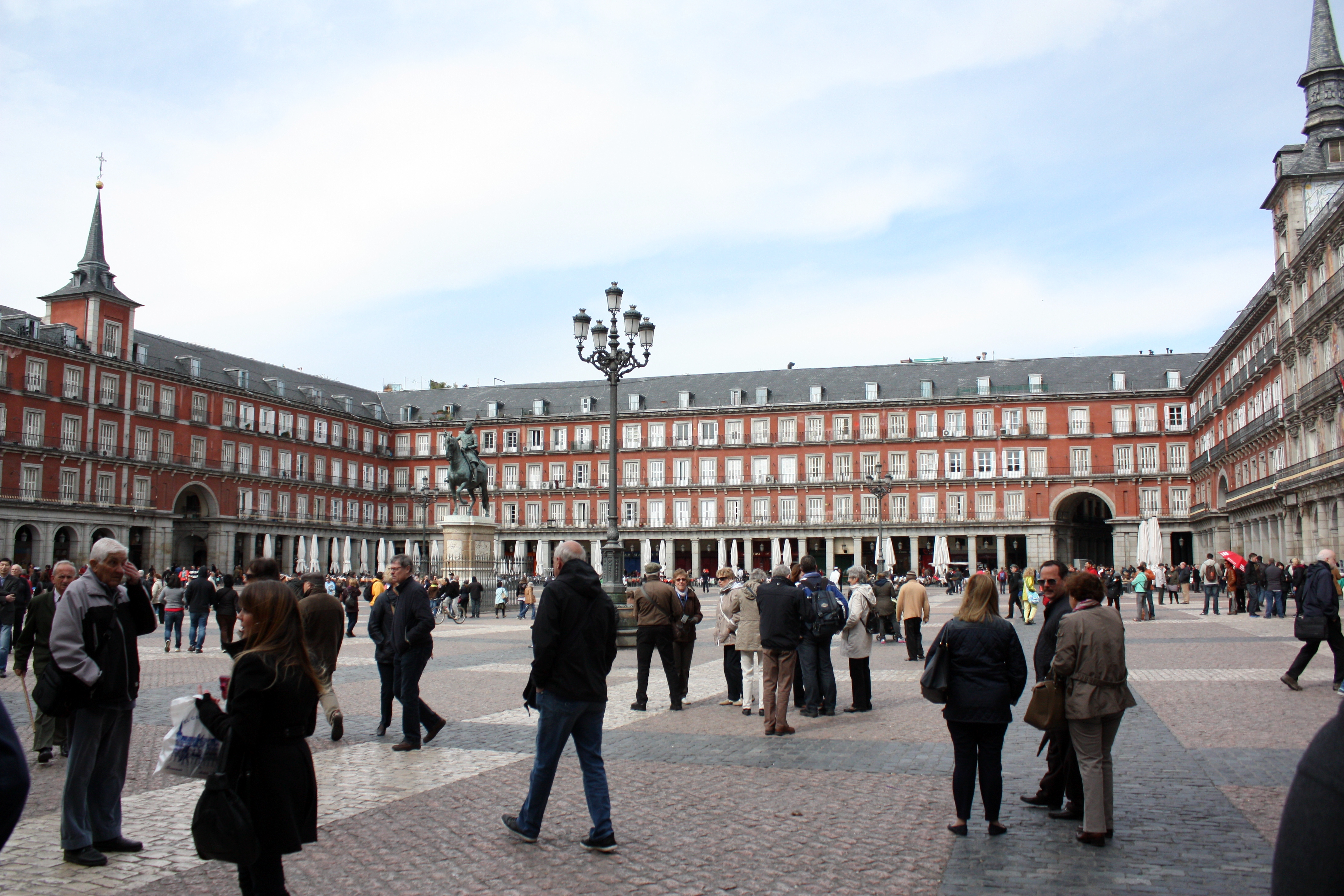
5) All the beautiful Plazas in Central Madrid: Plaza de la Puerta del Sol, Plaza Mayor and Plaza de Santa Ana are my particular favorites. Would have loved to sit out at a café but the chilly weather prohibited any outdoor seating.

Recap in photos:

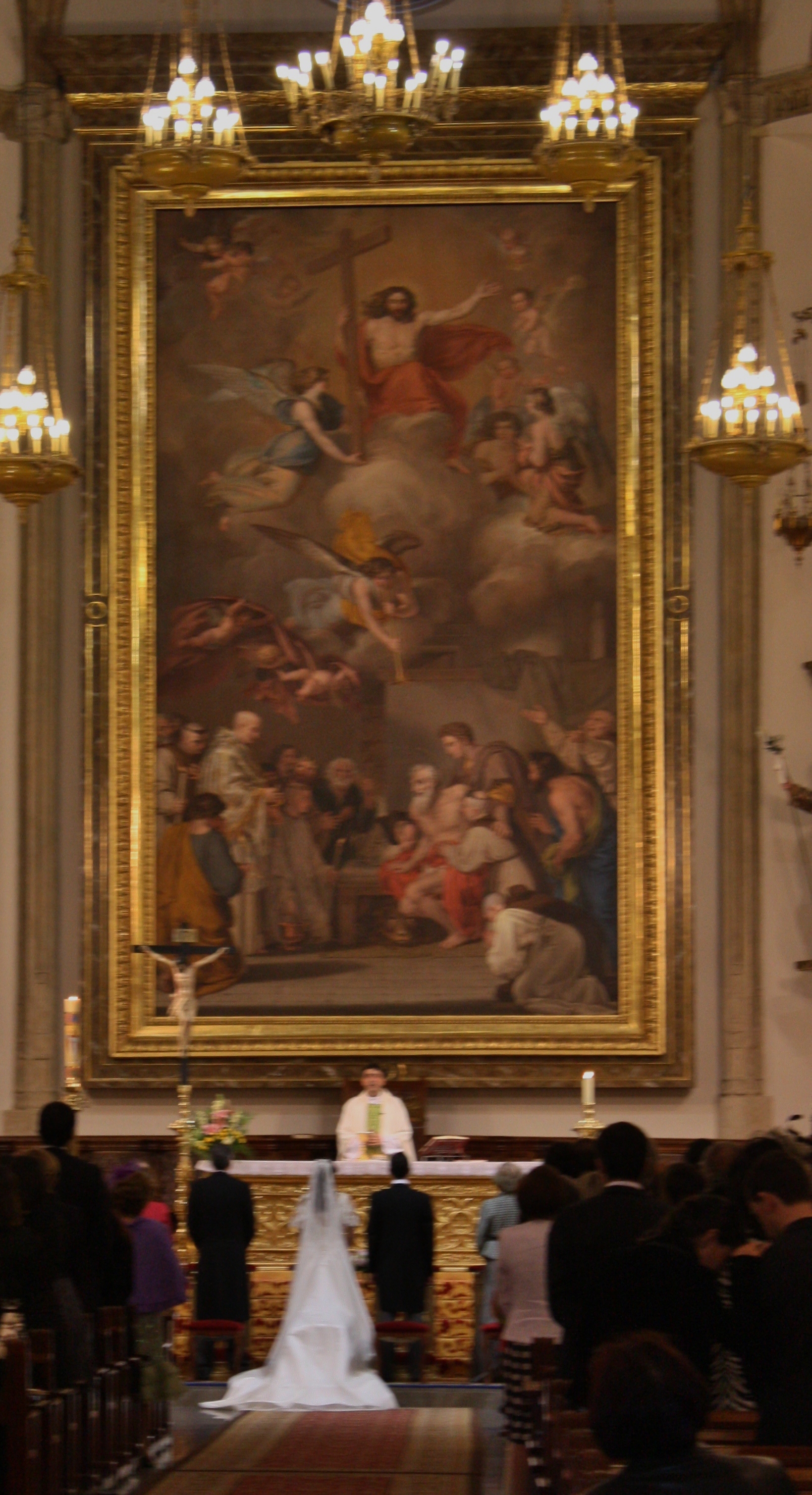
Iglesia de San  Jerónimo , across from The Prado, Madrid

Iglesia de San Jerónimo , across from The Prado, Madrid

Wedding in the beautiful Iglesia de San  Jerónimo

Wedding in the beautiful Iglesia de San Jerónimo

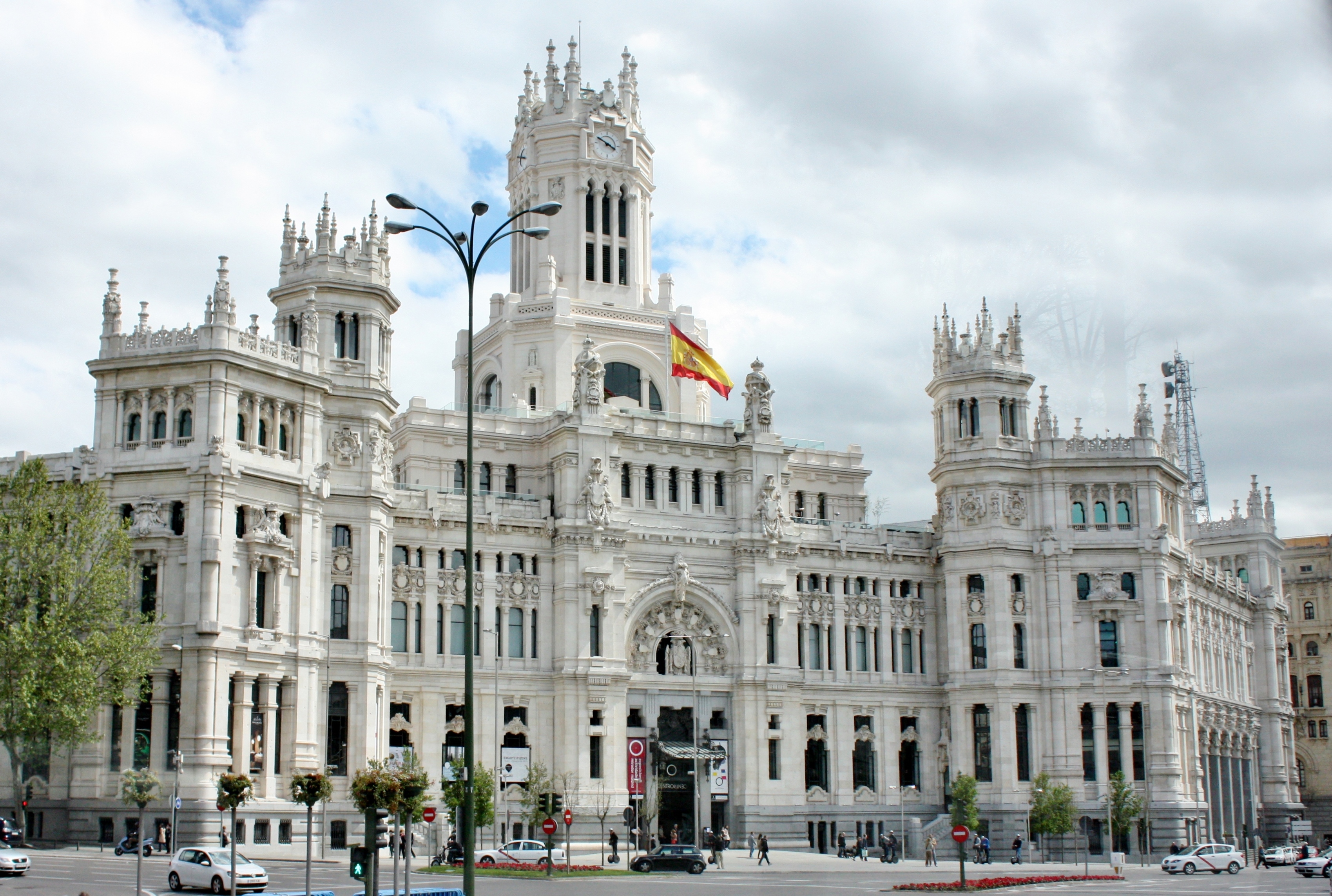
Ministry of Defence

Palacio de Comunicaciones (Currently City Hall Offices) at Plaza de Cibeles

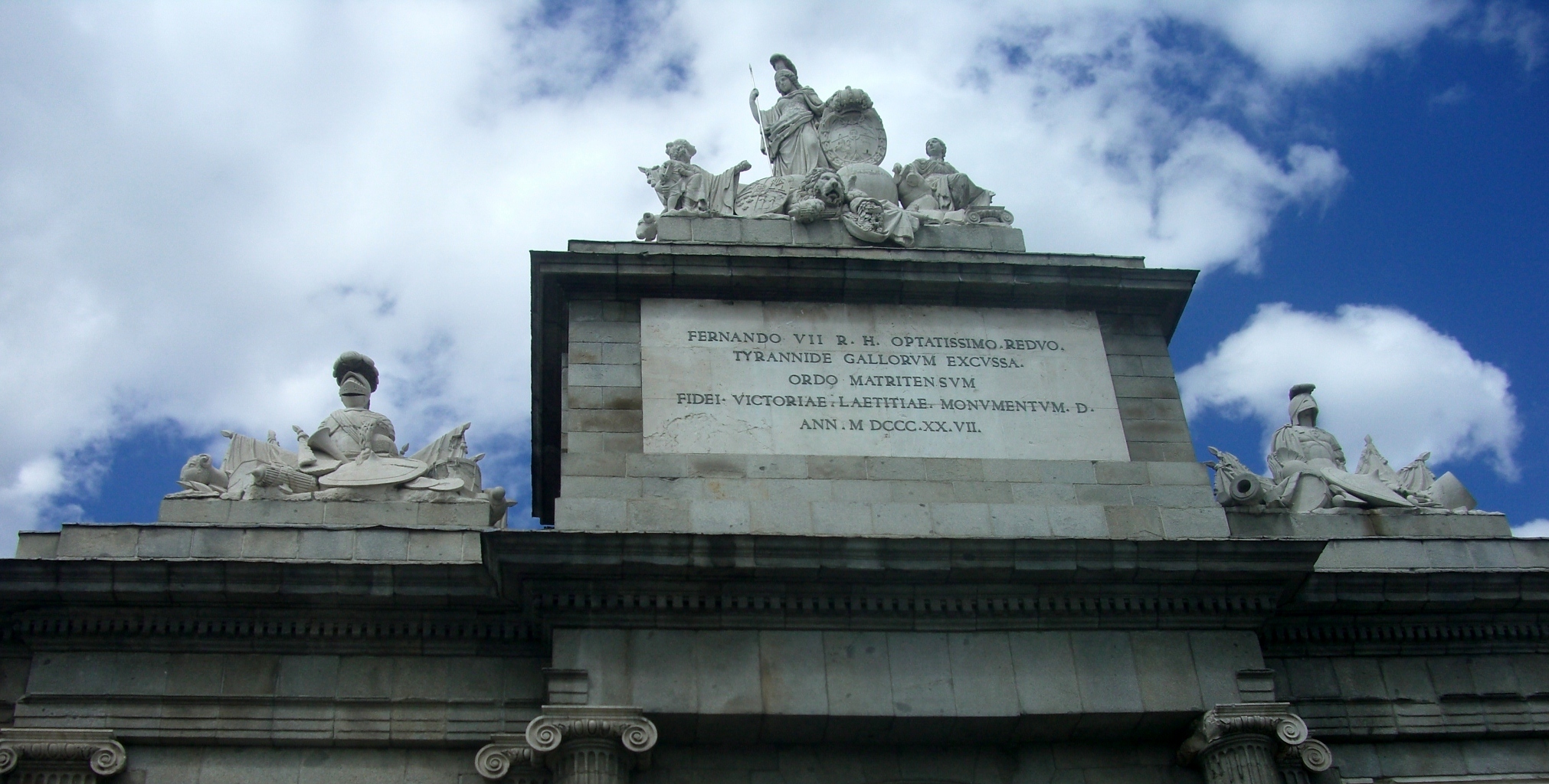
Fernando Arch Fernando VII, Madrid

Fernando Arch Fernando VII, Madrid

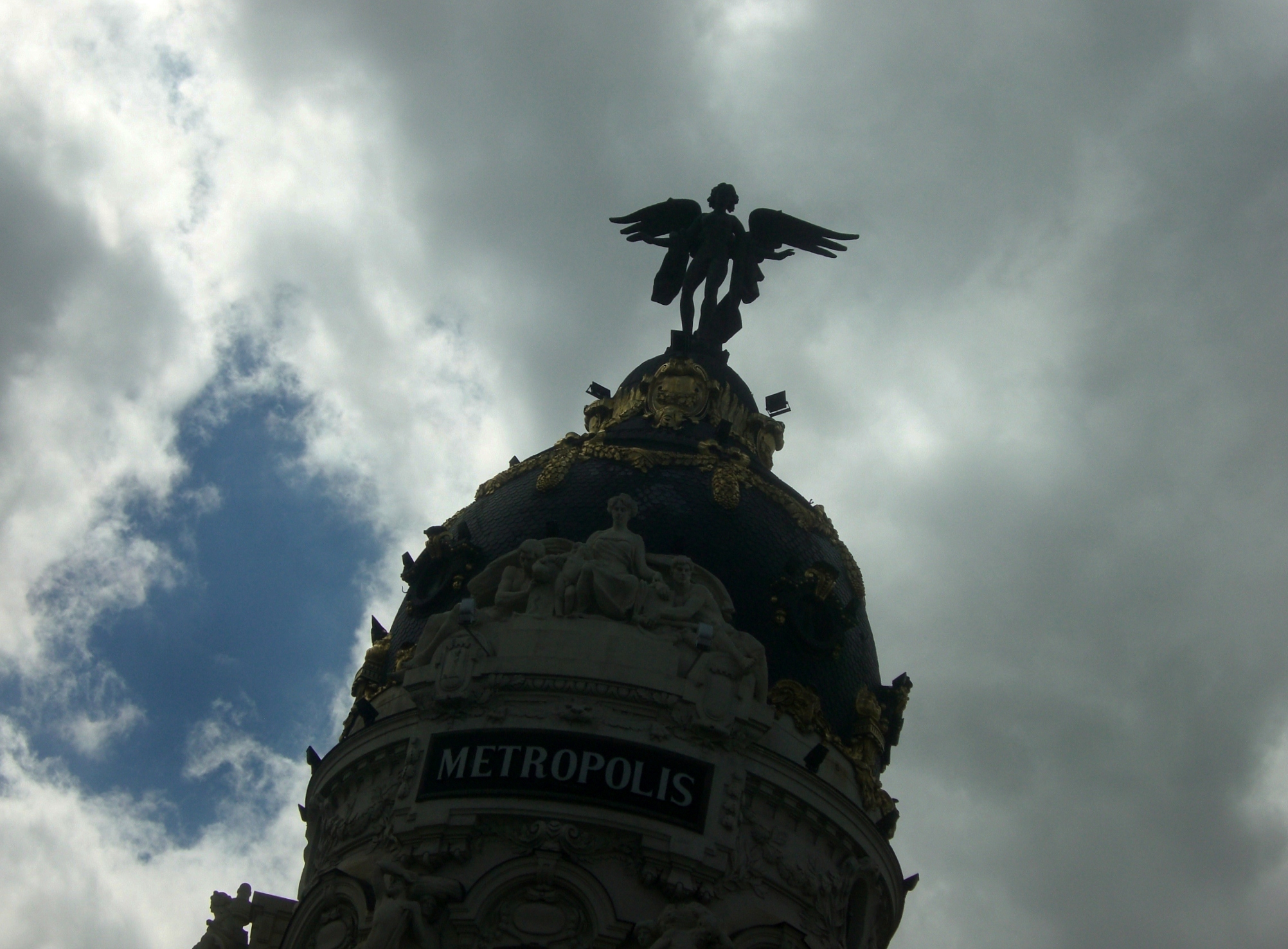
Dark clouds over Madrid

Dark clouds over Madrid

Fernando Arch Fernando VII, Madrid

Fernando Arch Fernando VII, Madrid

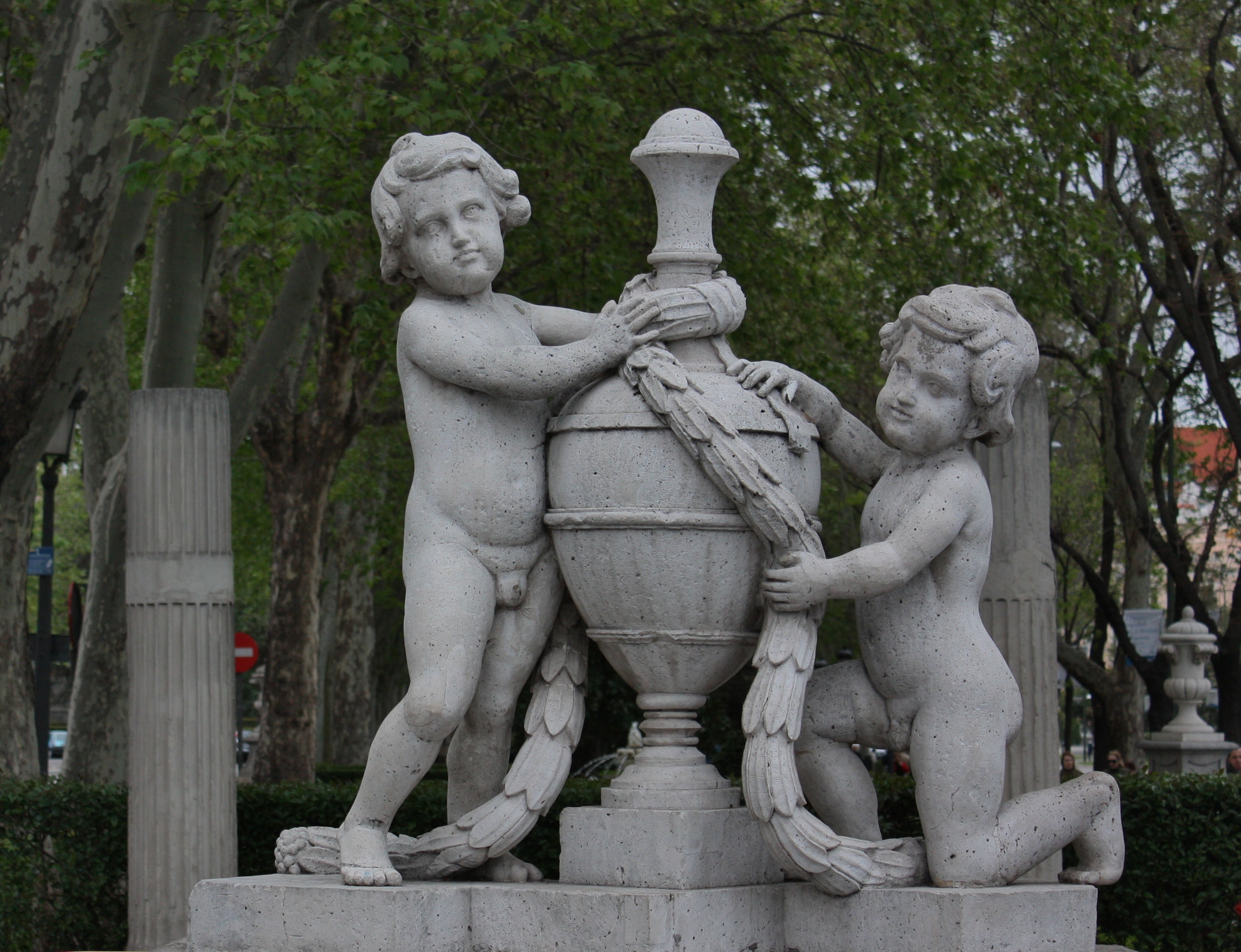
Cherub Statue in Madrid

Cherub Fountain in Madrid

Plaza Mayor, Madrid

Plaza Mayor, Madrid

Another Beautiful statue in Madrid

Another Beautiful statue in Madrid

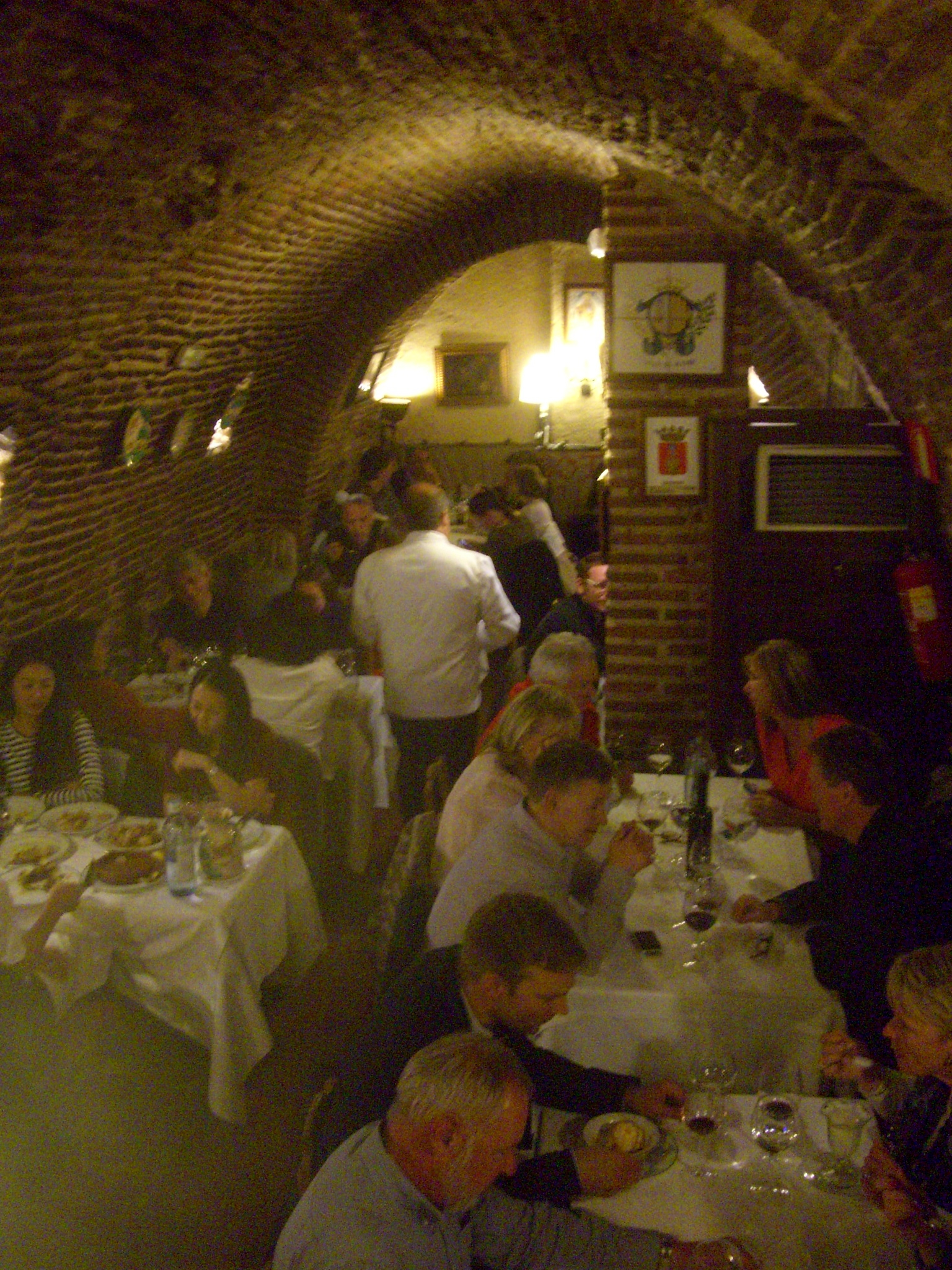
Cellar seating at Botin Restaurant, Madrid ~ considered the oldest restaurant in the world

Cellar seating at Botin Restaurant, Madrid ~ considered the oldest restaurant in the world

Police presence at the Madrid Marathon

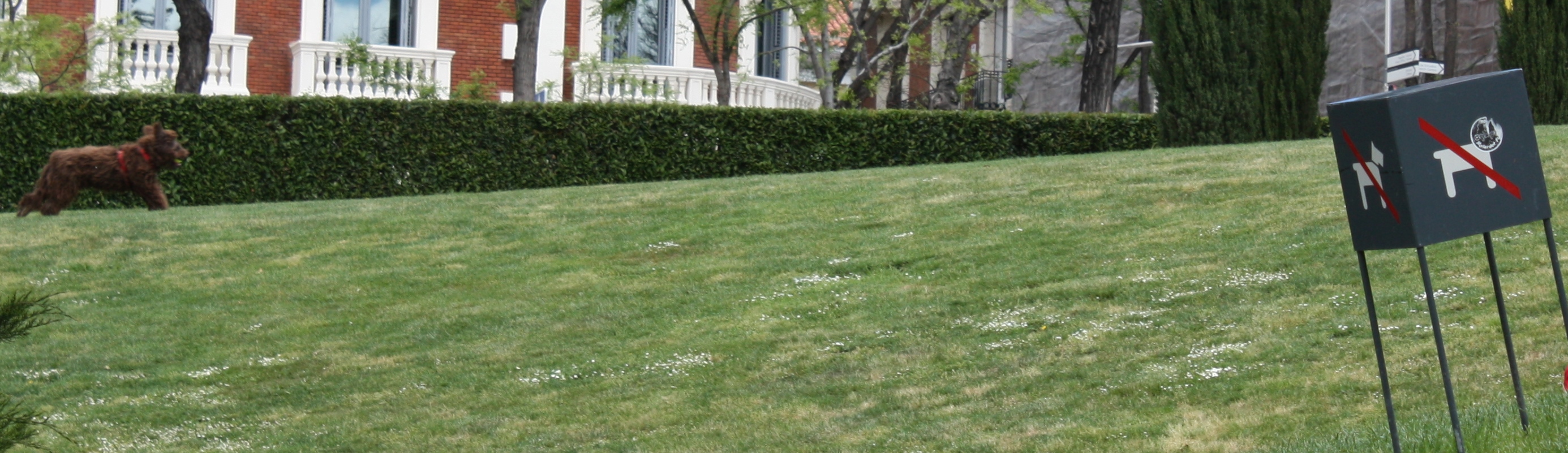
No Dogs Allowed ~ except this fuzz-ball

No Dogs Allowed ~ except this fuzz-ball (on left)

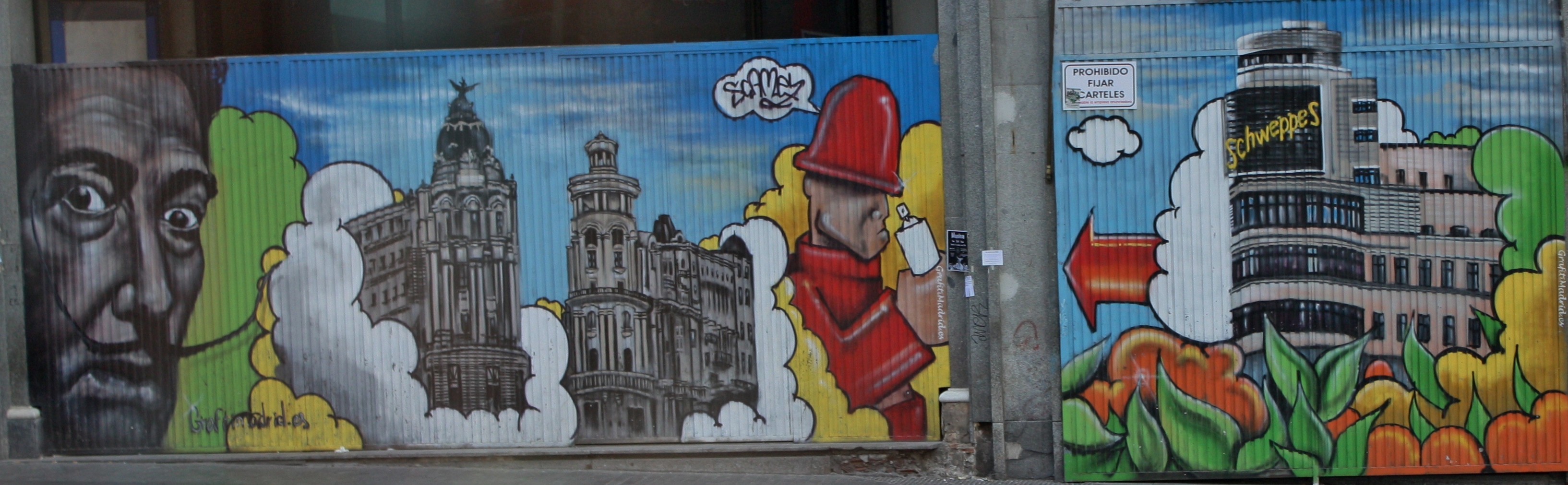
Murals in Madrid

Murals in Madrid